What food for the ski slopes?
After a breakfast based on cereals, fruits, and a hot drink, what food should you bring on the ski slopes? First, a morning snack to avoid a slump at 11 am.
An energetic and digestible lunch will help you last through the afternoon, but you should avoid eating too much fat or drinking alcohol. Hydrate yourself throughout the day and finish it with a good, not-too-heavy dinner, so as not to prevent yourself from sleeping.
Follow the guide: here are more details and practical tips on foods to prioritize during your winter mountain holidays!
In summary
Don't know what to eat to ski all day without running out of energy? Sport 2000 recommends having a mid-morning snack, such as dried fruits, nuts and seeds, or a cereal bar, to avoid fatigue. Lunch should prioritize proteins, starchy foods, and vegetables, while limiting overly fatty dishes and alcohol. Regular hydration is essential at altitude. In the evening, opt for a balanced meal to promote muscle recovery. Discover all our tips for adapting your diet to your ski days.
What food to eat on the slopes before lunch?
Due to the high energy expenditure caused by alpine or cross-country skiing (between 300 and 600 calories), it is not uncommon to experience the usual "slump" around 11 am. Yes, even if skiing is a recreational activity in the mountains, it is above all a sport!
To have the adequate nutritional intake and provide what your muscles need, bring food on the slopes: dried fruits, because they are rich in antioxidants and fructose. You can also take nuts and seeds, such as almonds or walnuts: they will provide you with omega 3 and minerals to last until lunchtime. Bringing cereal bars, a compote or a fruit is also an interesting alternative. All these foods will give you enough energy to last until lunchtime.
An energetic and digestible lunch
For lunch, even if it's delicious, forget garbures and other hearty dishes in a good altitude restaurant if you don't want to feel too heavy to tackle your afternoon of skiing.
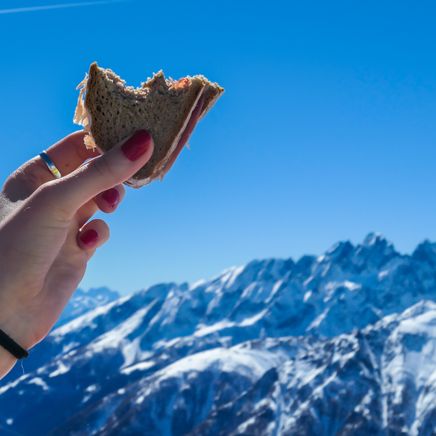
If you prepare your own food for the slopes for lunch, opt instead for proteins such as meat, hard-boiled eggs, or fish or ham to make your sandwich (half-baguette or wholemeal sliced bread for slow-release carbohydrates). Don't forget to add salad and/or vegetables.
Aside from your sandwich, take one or several vitamin-rich fruits (vitamin C in particular), such as pineapple, kiwi, or orange.
You can also opt for a lunch with a starchy food, such as a pasta or rice salad. Rich in carbohydrates, starchy foods are slowly assimilated by your body, so once ingested, this food will provide you with enough energy for several hours. Add fresh vegetables to your diet, particularly rich in mineral salts and fibers.
Stopping at a mountain restaurant or on the snow front in the resort is not a bad idea either, as you can eat hot food there, which will help you better fight the cold. But this meal must remain balanced. You should therefore avoid overly greasy food, for example, cheese, tartiflette, or raclette can wait until dinner... Opt for a recipe more suited to sports: mixed salad, pasta, galette, etc., and for light drinks (water remains the ideal drink for any athlete!).
While there are no breathalyzer tests to control skiers on the slopes, the effects of alcohol are as dangerous as driving in terms of reduced attention and for health. Furthermore, because it dilates blood vessels, alcohol lowers body temperature more quickly... even mulled wine! It is therefore better to skip alcohol during your lunch.
Constant hydration throughout the day
Due to the intense cold, your body dehydrates faster at altitude. You must therefore drink water regularly. Carry a water bottle in your bag. There are now bags with integrated water bottles and long straws: you can therefore drink on the slopes without having to stop.
Conversely, avoid alcohol and overly sugary drinks, otherwise you risk rapid dehydration.
What should you eat for dinner?
Food on the ski slopes is important, but when the ski day is over, you must think about dinner. This meal should allow you to "recharge your batteries" and nourish your muscles, without preventing you from sleeping and recovering your strength for the next day.
Ideally, eat poultry (e.g., chicken) or dishes based on fresh vegetables. You can also eat starchy foods or fish.
Nothing prevents you from consuming winter mountain recipes based on cheese (perhaps not every night, nor as food on the slopes...), because it is also about enjoying yourself during the holidays. Ideally, for your raclette, consume leaner cured meats, such as Bündnerfleisch or white ham, rather than garlic sausage for example. And remember to drink water to maintain your body's hydration.
With all these nutrition tips for athletes, you have all the keys to give your best on skis and be in good physical condition. In practice, it will certainly happen that you make some deviations during your holidays, enjoying a good meal in a resort restaurant or partying with your friends: no reason to feel guilty! It's up to you to adapt the nutrition advice to your program, depending on the effort to be made, the energy spent, and how you want to enjoy your stay in the mountains.