What are the basics of ski equipment?
Once equipped with your skis or snowboard, ski boots and poles, what other equipment should you absolutely think about to calmly descend the snowy slopes?
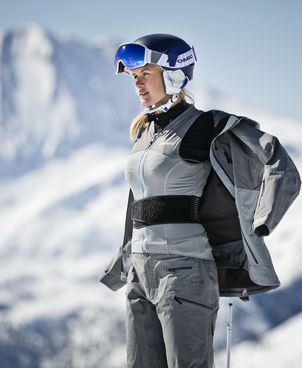
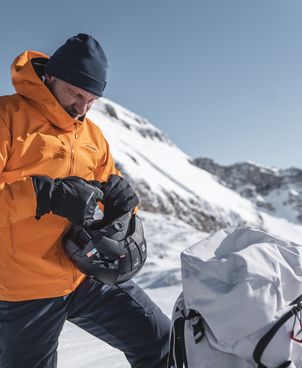
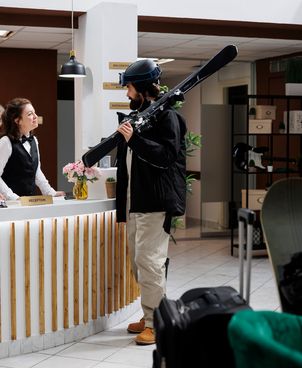
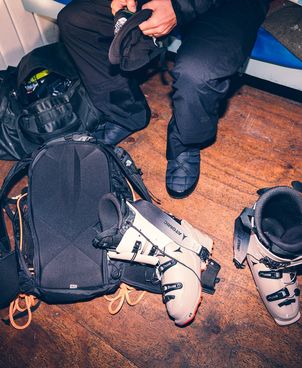
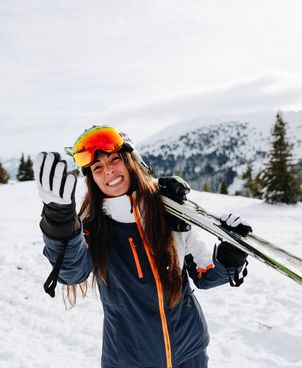
Helmet, ski goggles, waterproof clothing, sunscreen and protective lip balm are the essential equipment you will need to go skiing. If you go off-piste, you should also remember to bring a backpack specially designed for this purpose. We explain in more detail what clothes and accessories to bring for equipping yourself well for skiing !
In summary
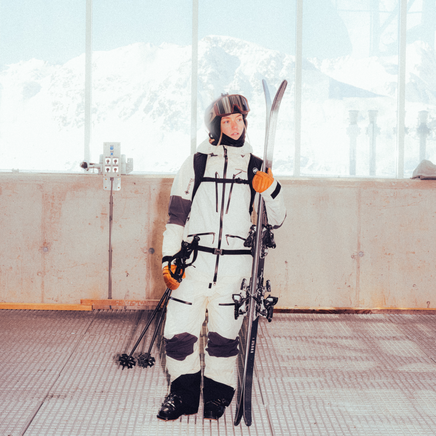
Dressing well for skiing requires a technical outfit that protects against cold, humidity, and UV rays while remaining breathable. The upper body: Apply the 3-layer rule: a breathable base layer (merino/synthetic), an insulating layer (fleece), and a waterproof and windproof jacket. The bottom: Opt for pants with optimal waterproofing for modularity, or a suit for maximum insulation. Essential accessories: Technical socks (without extra thickness), gloves or mittens, ski mask (category adapted to the weather), thin hat under the helmet, and non-slip après-ski boots. At the resort: Sport 2000 stores offer the sale of these technical equipment and personalized advice.
The helmet, essential ski equipment
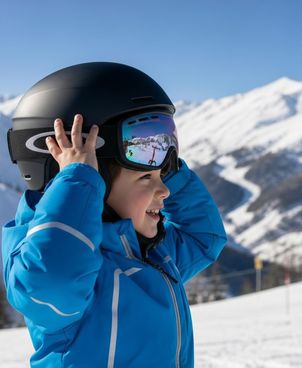
The helmet is an essential piece of ski equipment. Wearing it is not mandatory, but highly recommended. It protects against impacts (sometimes very violent), which can cause serious accidents and traumas (for this reason, avoid models with integrated headphones, in order to remain attentive to the dangers on the slope).
To combine quality and safety, you need to choose a helmet compliant with CE-EN1077 standard (European) or ASTM F-2040 (American).
There are ABS (Acrylonitrile Butadiene Styrene) shells, the least expensive category, solid in case of impact, but heavier, less well-ventilated, and quite warm (unless with an adapted ventilation system).
The In-Mold shell is thinner, better diffuses impacts in case of shock, and therefore limits the risk of trauma.
Finally, some skiers looking for safe and modern ski equipment opt for a hybrid shell helmet, as it combines the 2 previous technologies. These are the most resistant (and most expensive) helmets.
There are different helmet sizes (from 48 to 64) and children's sizes.
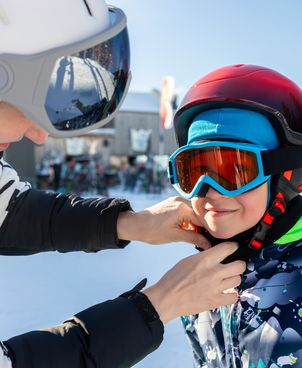
Remember to check that there isn't too much space between the helmet and the top of the goggles you plan to wear, but also enough space to wear these goggles.
Ideally, bring the goggles (and/or glasses) and the hat you will take on the slopes, to check that you are comfortable enough when wearing them with your helmet.
Ski goggles or sunglasses
Another essential piece of ski equipment: the goggles (because they protect more from impacts than sunglasses).
Its frame (goggle outline) must be solid, comfortable, and not let the wind through. The strap must also be easy to adjust, long enough, and very solid.
The internal foam should not obstruct your visibility or irritate or scratch your face.
Check that the ventilation system is effective, otherwise fog will ruin your view and your life once on your skis or snowboard (opt for an Over The Glasses system if you wear prescription glasses under your helmet, to avoid these fogging problems).
Ski equipment is also about having fun: your goggle frame can be fullframe (visible around the lens), frameless (the lens covers the entire structure) or semi-frameless... it's up to you to choose the goggles whose design suits you best.
Finally, choose a protective lens adapted to brightness (classified from 0 to 4). A category 1 lens will be suitable, for example, for skiing in poor visibility (e.g., in fog), while a category 4 lens is extremely dark and will withstand strong sunlight when the altitude is above 3,000 meters (like at the summit in Tignes or at 2 Alpes).
Ski jacket and trousers
Apart from the essential gloves, what are the basics of ski equipment regarding clothing to face the cold and snow?
Choose a ski jacket and ski trousers made of technical material such as Gore-Tex, Thinsulate or Primaloft, warm and waterproof materials.
The Schmerber index will give you the waterproof level of your clothing (the clothing manufacturer indicates it on a label). This index should be at least 10,000, or even 20,000 if you plan off-piste skiing (powder snow being dense, deep, and therefore wetter than groomed snow on the piste).
Your ski jacket and trousers must also be sufficiently ventilated to prevent you from sweating too much. Ideally, choose from jackets that have a retractable thickness.
Another useful piece of ski equipment: under the jacket and trousers, wear merino wool or synthetic clothing (insulating and breathable), as well as thin synthetic wool socks that will keep your feet warm while minimizing excessive sweating.
If you are particularly sensitive to cold, add a not too thick fleece jacket between your base layers and your ski jacket.
If you opt for a ski suit, it must have the same qualities as a ski jacket and trousers worn together.
However, a ski suit, for both men and women, has some disadvantages: in case of high heat (for example, if you stop for lunch in altitude restaurants, such as those found in La Clusaz), you unbutton the upper part, and it hangs and hinders your movements. Furthermore, it's not the ideal garment for going to the toilet.
If your ski equipment consists of a ski jacket and trousers rather than a suit, you can also use your jacket for hiking, for après-ski, etc., which also saves you from having to pack another coat for your stay.
The ski backpack
Not essential (but nevertheless very useful) for skiing on the slopes, the ski backpack is, however, essential for an off-piste skier.
It must contain a waterproof compartment to store your safety equipment (shovel, avalanche beacon – avalanche victim detector – , probe, and GPS), and be at least 50 liters if you plan to camp, in order to transport everything you need, for example, your tent or food.
Need more advice? Discover our guide to choosing your ski backpack or for a snowshoe hike.
Sun cream and lip balm
Another essential piece of ski equipment: sun protection. The reflection rate on snow exceeds 80% (whereas it fluctuates between 5% and 10% on the water surface). Therefore, an extremely protective sun cream is needed (ideally an factor 50+), and apply cream everywhere, including on the ears and neck, parts of the face sometimes forgotten. Apply cream at least every 2 hours and use a protective lip balm (anti-UV), an area extremely sensitive to solar rays.
All these tips apply to skiers of all levels, from beginners to winter mountain regulars. But if it's your first time in winter sports, feel free to consult our guides to prepare for your ski trip, so you don't forget anything and can go on holiday peacefully!