Ski luggage: how to properly protect your equipment?
When you go on winter sports holidays, it is advisable to make a checklist so as not to forget anything: ski jacket and pants, technical clothing, fleece jacket, gloves, sunglasses, ski mask, first aid kit, après-ski outfit, etc.
But it is just as important to provide protections for the different equipment, so that they are protected from impacts, scratches, humidity, etc. Discover the essential protections for your trip and for storing the equipment once at the resort, as well as some tips for properly packing your equipment.

In summary
Protecting your ski equipment during transport is essential to avoid scratches, bumps and moisture. Luggage choice: Opt for a rigid plastic suitcase (polycarbonate, polypropylene) that is resistant and waterproof, or a more manageable hiking backpack for snow. Transporting skis and boots: Use a fitted ski bag (ideally padded) and a waterproof, breathable boot bag with a rigid bottom. Fragile accessories: Protect the mask and glasses in a soft pouch slipped into a rigid case, placed on top of the suitcase. Alternative: The rental at the resort (via Sport 2000) avoids the purchase of these protections and the logistics of transport.
How to choose the right suitcase or travel bag for skiing
The first step is to choose the suitcase or bag : it must be durable, practical, and sized to accommodate all your equipment, while remaining easy to transport.
Choosing between a suitcase and a soft bag
A suitcase is a very good option for a winter sports trip, as its design already offers a first level of protection. It better resists shocks, crushing, and rough handling. Its outer shell also protects the contents from moisture, if it's not made of fabric.
On the other hand, a suitcase can sometimes become a burden when you arrive at the resort and have to take it from the car to the accommodation. Between the snow, sometimes uneven terrain, stairs, etc., a suitcase is not the most practical option, despite its wheels.
This is why some prefer a large bag, such as a hiking backpack, which can be easily carried on the back.
In this case, you can add extra protection against moisture with a special cover, and you'll need to make sure the bag is placed correctly in the car so it doesn't get crushed.
Choosing a suitable size suitcase
With a suitcase that's too large, your clothes, equipment, and accessories may not be securely held, which could damage them during transport. And with a suitcase that's too small, you'll have to pack your belongings tightly, also risking damage.
It is therefore important to choose a well-sized suitcase or bag, with different compartments, so that each item of clothing or object has its dedicated place.
Make sure to choose a resistant and waterproof suitcase
Not all suitcases are made of the same materials: for skiing, it's better to opt for a plastic model, such as polycarbonate or polypropylene.
This type of material provides both good resistance, partially protects your equipment from external impacts, and offers protection against snow, rain, etc.
Protecting skis or snowboard during transport
Let's now talk about ski equipment itself: discover how to properly protect your pair of skis or your snowboard.
The ski or snowboard bag: an essential
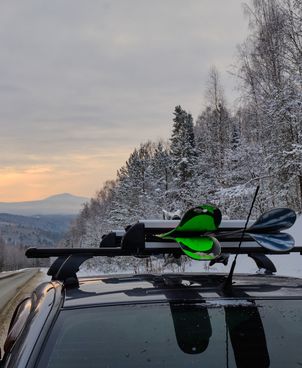
Whether you transport your skis in the car, on the roof rack, on the train, or by plane, you won't be able to do without a protective cover. In its most basic version, it first allows you to store skis together, to protect them from scratches and weather conditions that could damage them (rain, snow, sun). And of course, it's a much more practical solution for transporting your equipment!
We advise you not to skimp on the quality of your cover's design and materials, so that it is lightweight, waterproof, resistant, durable and practical.
As for the size of the cover, it should be slightly larger than the skis or snowboard, to easily insert your equipment (including ski poles) and close the cover without difficulty.
If you want to store other things than skis or snowboards (helmet, gloves, knee pads, etc.), pay attention to the compartments that allow you to organize yourself well and protect each item.
Our tips for enhanced protection
For optimal protection of your equipment, you can opt for a padded ski bag. The padded lining inside indeed guarantees enhanced protection against impacts.
Failing padding, it is also possible to use tricks, for example with the technique of using clothes or socks to secure your skis in the cover or by attaching your two skis base to base with a strap.
Transporting boots: the essential ski boot bag
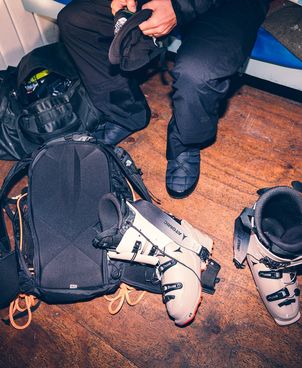
Ski boots also deserve special attention, to avoid the drawbacks of moisture and prevent scratches. For this, equip yourself with a special bag for ski or snowboard boots, which will also have the advantage of considerably facilitating transport. To make your choice, keep the following main criteria in mind:
bag size, to easily store and remove the boots;
waterproof and breathable, to prevent snow, rain, and moisture from reaching the boots during transport and to allow good ventilation if you store your damp boots in it;
resistance, with possibly a rigid bottom, so that your boots withstand impacts they might suffer during transport;
lightness : ski boots are already relatively heavy, so there's no need to add more weight with their storage bag;
carrying comfort, because there are bags with a single handle, others with a strap that allows the bag to be carried on the shoulder, but also backpacks very practical for transport.
As with the cover, there are boot transport bags that have several compartments. This can be useful if you also want to include your helmet, hat, gloves, ski goggles, sunscreen, etc. However, this type of bag is obviously bulkier and will be heavier to carry.
Protecting goggles and glasses: essential accessories
Particularly fragile, sensitive to shocks and scratches, goggles and glasses must absolutely be protected during the journey, as well as during your stay.
It is therefore essential to store them in a rigid case, perfectly adapted to their size. A quality rigid case protects against crushing and prevents damage to the screen and the anti-fog treatment of the goggles. We also advise you to take this case on the slopes if you have a backpack or large pockets, so that you can store your goggles or glasses without any risk if you take a break in a mountain restaurant, for example.
In the suitcase, a double protection is nevertheless recommended: first place your glasses or goggles in a soft pouch, then put them in their rigid case.
And to take maximum care of this sensitive equipment, make sure to find them the appropriate place in the suitcase, i.e., at the top, to avoid pressure and crushing.
Renting your equipment: a practical solution to avoid hassle
Organizing well and protecting your equipment therefore requires a certain rigor and necessitates investing in complementary protective gear. Not to mention the logistics required for everything to fit in the car or when taking public transport.
So, to spare you these hassles during a winter sports stay, why not prefer equipment rental, whether daily or weekly?
Online ski rental
With Sport 2000, you can make your reservation online and pick up your skis, poles, snowboard, boots, and helmet at the resort. For adults as well as children, and for all levels, our stores have a wide choice of equipment for winter sports and facilitate your mountain holidays with practical services!