How to choose your ski backpack without making a mistake?
Bringing a backpack for skiing is extremely practical: you can store water, sunscreen, a warm garment, and multiple essential or optional accessories in it, to make the skiing experience even more enjoyable.
But how to choose your ski backpack ? It partly depends on the use you intend to make of it: on-piste or off-piste? Here are some important points to consider to make the right equipment choice.
In summary
The choice of a ski backpack depends mainly on your practice, the necessary volume, and the level of protection. Piste skiing: Opt for a compact and lightweight bag of 20 to 30 L (or 11 L for freestyle) with robust straps, waterproof materials, and practical options (water bladder pocket, back reinforcement, ski carrying). Expect to pay between €30 and €100.Freeride & Touring: Opt for a larger volume (35 L for the day, 50 L+ for bivouac) equipped with a quick-access waterproof compartment for safety gear (shovel, probe, avalanche transceiver), ice axe attachments, and ideally an airbag system (Avabag type).
How to choose your ski backpack for the slopes?
Between a backpack for summer hiking and a winter model for skiing, the requirements are not the same. Here are the important criteria to know to find the ideal model to take on the slopes, among all available products.
How to choose the size and volume of your ski backpack?
First, it's better to choose an easily transportable backpack : small (especially since you have to hold it in front of you when you're sitting on a chairlift...) and light. Conversely, if you ski with a bulky bag on your back, it will hinder your movements, you risk getting tired more quickly, and you will control your speed less well.
This bag should not be too small (volume between 20 and 30 liters). It must be able to contain essential items for the whole day: water (bottled or in a water bottle), sunscreen, anti-UV lip balm, an extra warm garment, and food (a snack to curb hunger or a more complete meal, for example a sandwich), or even a first aid kit.
Your bag also allows you to carry your wallet and your phone (with a portable battery if applicable).
Nevertheless, some skiers and snowboarders prefer very small backpacks (around 11 liters), in order to be able to do freestyle tricks more easily on the best snowparks, like those in Tignes or Avoriaz.
Also consider backpacks with a flexible straw system connected to a water bladder (Camelbag type), to drink without dehydrating (and avoid having to stop to drink).
How to choose a comfortable ski backpack?
Before buying it, try on your backpack with the coat or suit that you will wear while skiing: this way you will know if you are comfortable with the bag and your garment. There are also men's or women's models, or to relieve certain pains, for example bags equipped with a back reinforcement, so that the weight of the bag does not weigh on the shoulders.
Don't give in to the sirens of fashion either: if some bags have an attractive design, they are not necessarily designed for skiing. Comfort is one of the key criteria for finding the ideal bag.
How to choose a durable ski backpack?
Unlike ski backpacks, many standard bags are not waterproofenough. In case of perspiration, precipitation or falling in the snow, a special ski backpack and its contents will not be affected by moisture. Note that some ski bags are equipped with a special anti-perspiration back panel.
Also check that the bag has very robust seams and straps, but also several practical pockets, for example side pockets to easily store snacks or sunscreen. It can also be equipped with carabiners (to hang your gloves), a helmet holder or a waist pocket.
Some backpacks are even equipped with a ski or snowboard carrying system, horizontally or vertically.
What is the price for this type of bag?
If you opt for mid-range equipment, the price can range between thirty and one hundred euros. It all depends on the volume, the number of pockets, integrated technologies, the type of materials used, the choice of brand, etc.
Don't compromise on quality, especially sincea ski backpack remains versatile and can also be used for hiking, cycling, snowshoeing in the mountains, etc.
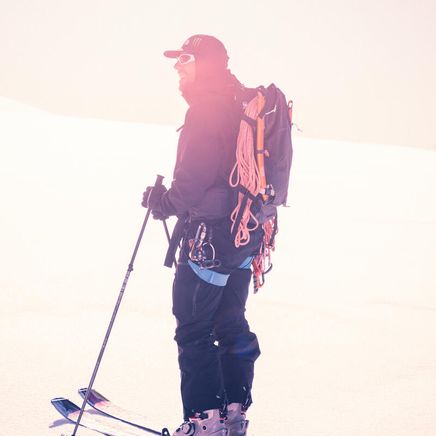
How to choose your ski backpack for freeride and ski touring?
Do you want to discover beautiful off-piste routes, whether freeriding or on ski touring ? How to choose your ski backpack for off-piste, absolutely essential?
Such a backpack must include an easily accessible waterproof compartment, in order to store essential safety equipment (shovel, probe, avalanche transceiver, or even ski GPS to progress with complete peace of mind), even if many piste ski backpacks offer such a compartment.
To ensure your safety in freeride, where the risk of avalanche is higher, you can also opt for an Avabag bag, currently marketed by the Ortovox brand. This backpack designed for off-piste (freeride and ski touring) has an integrated airbag system, which deploys easily in case of an avalanche.
Furthermore, off-piste bags are generally larger than backpacks used only for piste skiing (volume of 35 liters or more if you are going for the day). If you plan to camp in the wilderness, you will then need to opt for a larger backpack (50 liters or more), in order to carry the essential equipment for your expedition, such as your tent, sleeping bag, food, or cooking utensils.
Don't forget that your backpack must be both rigid, waterproof, and durable. Comfortable (for example with a foam back support), it must also have a sturdy waist belt and shoulder straps to ensure good support.
In addition to a ski or snowboard carrying system, essential for progressing more easily in very deep snow, it is also useful to choose a model equipped with an ice axe holder.