Is the helmet mandatory on ski slopes?
You are preparing a mountain trip this winter, and you are wondering if you must wear a helmet on the slopes ? Most often, it is equipment that is not required in French ski resorts, but there are exceptions. And above all, not mandatory does not mean useless, far from it! The helmet is indeed your best ally for protecting your head in case of an accident. And for it to be effective and truly protect, it is important to choose your ski helmet well. So here are some prevention guidelines and advice so that you can spend your mountain holidays in complete safety!
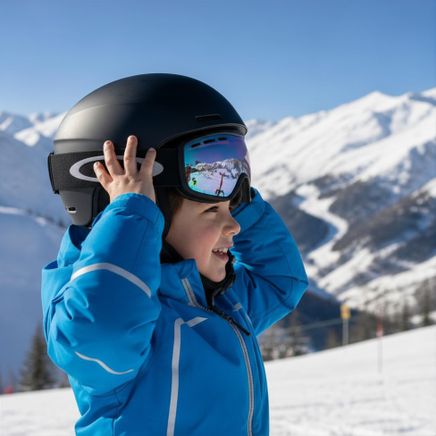
In summary
Wearing a helmet is not mandatory in France on public slopes, but it is highly recommended. Regulations vary by country and activity.
Regulations : In France, it is only mandatory in ski schools, supervised outings (freeride), and tobogganing. In Italy, Spain, and Austria, it is mandatory up to 14 years old.
Safety : It protects against major head injuries, even in low-speed or stationary accidents.
How to choose it : Measure your head circumference above the eyebrows for the correct size. Adapt the model to your practice (piste, reinforced freestyle, lightweight ski touring) and prioritize renting for occasional use.
Wearing a helmet on the slopes: mandatory or recommended?
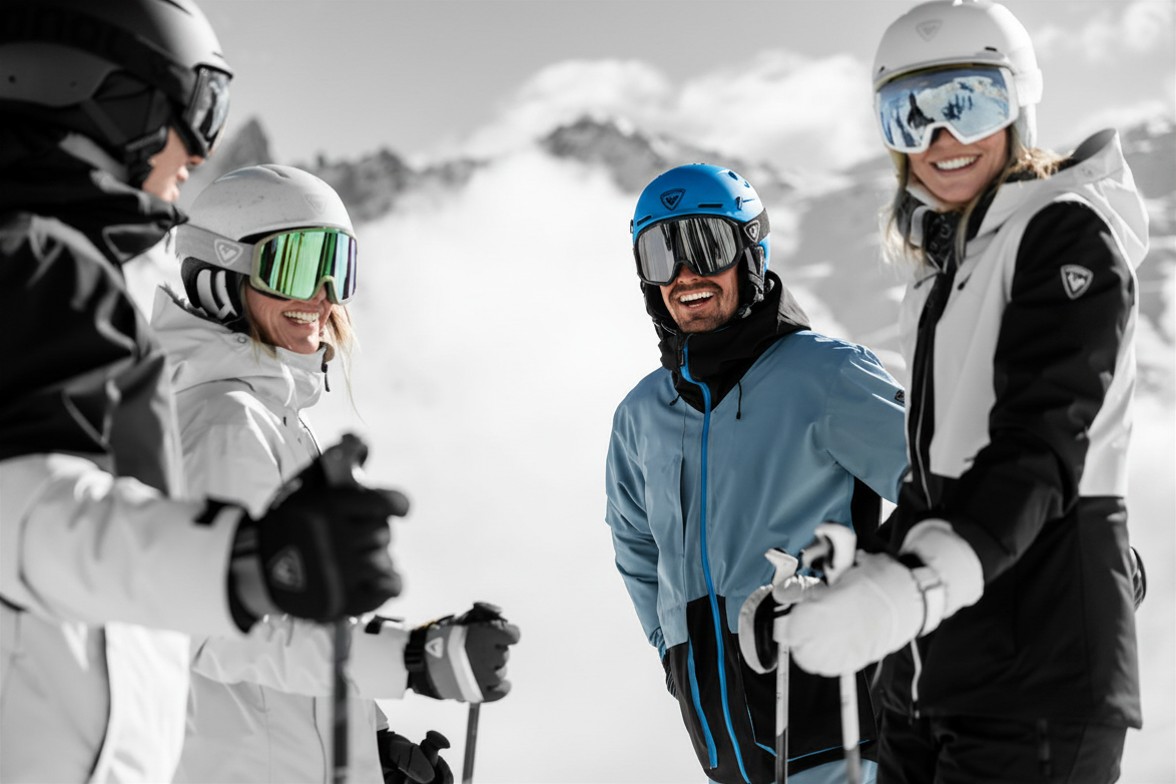
Is a helmet mandatory on alpine ski slopes? Generally, in France, the answer is no. However, if you go skiing in neighboring countries such as in certain regions of Austria, wearing a helmet is required. Similarly, in Italy, Spain, and throughout Austria, a helmet is mandatory for young skiers up to the age of 14. This measure is currently under discussion in France, with the idea of legislating on wearing a helmet for people under 1.50 m.
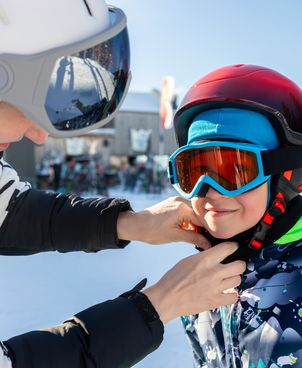
To date, in France, the obligation to wear a helmet applies only in certain ski schools for learning to ski and for supervised outings (e.g., freeride with a guide). It also happens that activity providers require wearing a helmet for toboggan runs, competitions, and sporting events, etc.
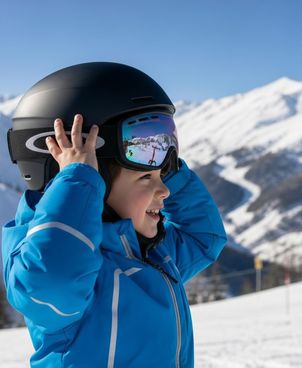
Thus, when you simply go skiing on the slopes of the ski area, you are not obliged to wear a helmet. However, it is a highly recommended accessory, because ski falls can be dramatic, even if you ski at low speed or if you are hit while stationary. The helmet protects against trauma and could even save your life in case of a fall or collision. Especially since brands now offer helmets with technologies that make them safer, lighter, better ventilated, and more comfortable.
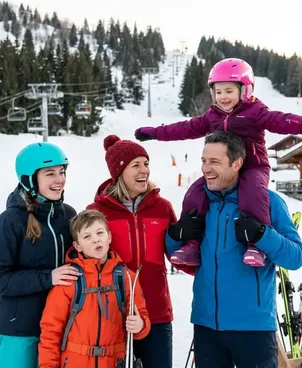
In summary: for your safety on the ski area, we strongly recommend wearing a helmet, and even more so equipping your children who could suffer serious consequences in the event of an accident.
What criteria for choosing a comfortable and high-performance ski helmet?
For the helmet to properly fulfill its protective function and not bother you, you need to know how to choose a ski helmet well. Here are the things to know to find the right equipment!
A ski helmet of the right size
The first step in choosing your ski helmet is to know your size. Indeed, to be effective and comfortable, the helmet must fit perfectly on the skier's head, without being too tight, especially around the temples. To choose the correct helmet size, you must start by measuring your head circumference. To do this, use a tape measure and wrap it horizontally around your head, using your eyebrows as a reference. You will thus obtain your head circumference in centimeters, which will allow you to choose a suitable helmet, among the children's or adult models.
Our tip: if you don't have a tape measure, you can use a string or a piece of twine, which you will then measure with a ruler or a meter stick, by laying it flat on a table for example. Because even if a helmet is not mandatory on the ski slopes, it must nevertheless fit you... like a glove.
A ski helmet adapted to the discipline
Choosing your ski helmet should not be done only by taking into account its size, you must also ask yourself how you will use it. Indeed, if you only want to do alpine skiing, you can settle for a classic and versatile helmet, which will protect you in case of a fall or collision with another skier. However, if you want to try other winter sports, for example freestyle, it is highly recommended to choose a helmet dedicated to this practice, more solid and more resistant.
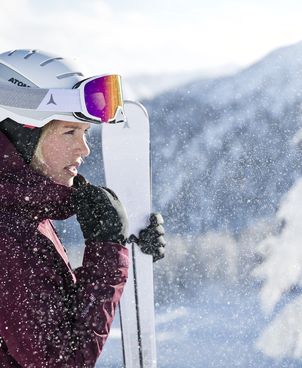
Even if a helmet is not mandatory on the ski slopes, we strongly advise you to wear one. It is all the more recommended for ski touring or freeriding. Opt for a ski helmet among lighter and better ventilated models, which will thus be easier to forget and guarantee you more comfort. Air will be able to circulate more freely, while protecting you from the cold. Since these practices present a lower risk of falling (unless you go through dangerous places), it is not necessary to wear a heavy and more robust helmet.
Understanding the different ski helmet technologies
As you will have understood, wearing a ski helmet is not (yet) required, but more and more skiers are wearing one for their safety. To meet the demand, helmet manufacturers offer you to benefit from greater comfort by opting for helmets equipped with accessories, such as:
A ventilation more or less significant to evacuate heat
Systems for adjustments to perfectly fit the helmet to your head and your other equipment (goggles, glasses)
A inner lining more or less thick, offering more protection against the cold
An integrated visor to avoid having to wear glasses or goggles
A audio system allowing you to listen to music when waiting at ski lifts or taking a break on the slopes.
While waiting to see helmets become mandatory on ski slopes, if you already wear one, note however that the equipment described above is optional and makes helmet prices vary from double to even triple if you opt for a high-end model.
Choosing your ski helmet should therefore be done by taking into account your budget, your needs, your desires, but also the frequency of use of your equipment : it is indeed of little use to choose a state-of-the-art helmet if you plan to use it one week a year; a mid-range model will do perfectly. Similarly, if you are going on a ski holiday for the first time or not every year, it may be simpler to rent all your equipment in a ski rental shop, helmet included.