Thermal underwear: staying warm all winter in the mountains
To dress comfortably and warmly during ski holidays, there are some essential clothes and accessories, such as a ski jacket, socks, a hat, gloves, waterproof shoes, a fleece, etc.
What we think less about, however, is thermal underwear. We're not talking here about men's boxers or briefs or women's sports bras, but clothes worn under a sweater, sweatshirt, fleece, or ski jacket. They are indeed essential to be protected from cold and humidity ! Discover why they are indispensable and what thermal underwear to pack in your suitcase for a winter trip to the mountains.
In summary
Thermal underwear constitutes the essential 1st layer of the 3-layer system, serving to wick away perspiration to avoid the feeling of cold. Materials: Prefer synthetic fibers (polyester, polyamide) for quick drying or merino wool for its thermoregulating and anti-odor properties. Cotton is to be avoided. Fit & Comfort: Opt for a fitted cut close to the body (second skin effect) without compression, ideally with flat seams or seamless technology to avoid chafing. Types of clothing: The range consists of long-sleeved jerseys (with or without a zipped collar), leggings/tights (long or 3/4) to be worn under trousers, and short-sleeved t-shirts for milder temperatures.
Thermal underwear: the first layer of your outfit
For a good compromise between warmth, breathability, and comfort, it is advisable to follow the 3-layer system : a breathable and quick-drying garment, an insulating garment that creates a thermal barrier, and a waterproof garment to protect against moisture, cold, and bad weather.
Thermal underwear is the perfect solution for an effective first layer. Directly in contact with the skin, they are designed to wick away perspiration to the outside and dry quickly, to prevent moisture from lowering the temperature.
This is essential, because when you sweat while skiing, hiking, or doing sports activities, moisture sticks to the skin if the base layer is not suitable. The result: when the wind blows or when you take a break, you are guaranteed to feel cold.
Choosing your thermal underwear: the essential criteria
You're ready to put together your ski outfit, but you don't know how to choose the right technical underwear? Here are our tips for an effective thermal first layer.
A breathable technical material
If there's one material to banish for your thermal underwear, it's cotton, as it tends to retain moisture. Moreover, if you shop in a specialized section for winter sports, you will probably not find technical clothing made of cotton.
Instead, opt for synthetic fibers like polyester or polyamide, which wick away moisture very well and dry in record time. Alternatively, you can also opt for merino wool, a soft natural fiber, known for its thermal regulation capacity, breathability, and anti-odor effect.
There are also fabrics that combine merino wool and synthetic technical material, to enjoy the advantages of each (softness, thermal protection, breathable fabric, etc.). Brands also develop technical fibers with specific technologies, designed to offer superior protection against the cold, to wick away perspiration even better, to improve comfort and the feel of the garment on the skin.
A fitted cut, but one that doesn't compress
To be effective, technical underwear must be close to the body, and even stuck to the skin. While this may seem counterintuitive, it is actually essential for good perspiration wicking.
It is therefore important to choose a well-fitted cut, ideally in a stretch material for more comfort. Be careful, however, not to opt for a garment that is too tight, which would reduce comfort and freedom of movement, or even limit proper blood circulation.
Technologies integrated into the underwear
To offer increasingly comfortable and high-performance underwear, brands integrate technologies and consider details that can make all the difference.
It is particularly interesting to opt for seamless or flat-seamed technical underwear if you are sensitive to chafing and irritation.
If you tend to sweat a lot and temperatures are rather mild, you can also consider a garment with mesh ventilated zones, which promote breathability (but reduce the level of insulation).
Different types of technical underwear for winter sports
In both men's and women's collections, there are 3 main types of technical underwear for mountain sports activities: here are the essentials for putting together your ski or winter hiking outfit.
The long-sleeved jersey
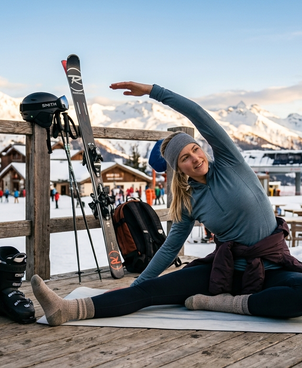
The long-sleeved t-shirt is undoubtedly the most common and useful technical underwear. Covering the entire upper body well, it offers a very effective thermal and breathable first layer.
Some jerseys also have a collar, which allows for slight neck coverage and prevents wind from seeping in, while others have a zipper, which allows the jersey to be partially opened in case of overheating.
The legging or tights
Worn under ski or hiking pants, the technical tights provide additional insulation while promoting good freedom of movement, almost making you forget you're wearing them.
It is available in classic long version or ¾ length depending on your preferences, but in all cases, you must make sure to choose the size that fits you perfectly, so that the leggings stay in place without compressing you.
The technical t-shirt
Lighter than a long-sleeved jersey, the technical t-shirt is suitable for intense efforts, mild days, or as a first layer during ascents.
Since it does not fully cover the arms, its thermal efficiency is lower, but some skiers find the t-shirt more comfortable and more suitable when temperatures are mild.