Men's ski outfit: combine performance and style this winter
For a men's ski outfit complete, you need to think about clothing, footwear, and accessories, by relying on technical and comfortable materials, but also on stylish designs.
Sport 2000 gives you its tips for putting together your men's winter sports outfit and dress you from head to toe to face the mountain conditions!
In summary
A successful men's ski outfit relies on the 3-layer rule, suitable accessories, and the choice of specialized brands. The 3 layers: Combine a breathable technical base layer (1st layer), an insulating fleece in synthetic or merino wool (2nd layer), and a waterproof and windproof jacket/pant set (or suit) (3rd layer). Après-ski & Accessories: Adopt après-ski boots with lugged soles for the resort. On the slopes, complete with reinforced merino/synthetic socks, waterproof gloves or mittens, a neck warmer, and a ski mask suitable for the weather. Tips: Prioritize technicality and ideal size over style by opting for leading brands (Salomon, Rossignol, Millet, Odlo).
Ski underwear: the first layer for your outfit
Forget your favorite cotton t-shirt and your usual sports t-shirts: for skiing, you need suitable technical underwear. Their design allows foroptimal wicking of moisture caused by perspiration, to avoid getting cold.
Ideally, opt for a model with long sleeves and well close-fitting (but not compressing) for optimal sweat wicking.
In very cold weather, you can also choose technical under-pants, i.e., a kind of legging to wear under ski pants, which will also help you combat moisture and cold.
Fleece, sweater or sweatshirt: the second layer to keep you warm
Given the cold temperatures in the mountains, which are even harder to bear when it's windy, you need to wear a second layer over your technical ski t-shirt.
This layer must be warm, breathable and able to wick away moisture to maintain a stable body temperature throughout the effort. It must also remain flexible enough not to hinder your movements.
Fleece remains the essential garment, to be chosen in synthetic materials or why not in merino wool if you prefer natural materials (merino wool has the advantage of being thermoregulating, not retaining odors, and being soft to the touch).
In the men's range, there are all types (with full-length zippers or just at the collar, with or without pockets, etc.) and in all colors, from the most understated to the boldest.
Pants and jacket or ski suit: the ultimate barrier against cold and humidity
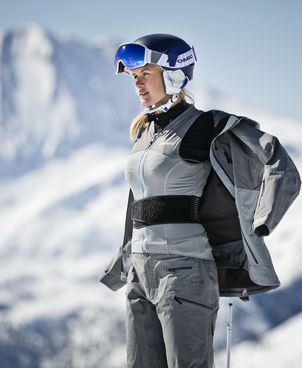
Last layer for your ski outfit: the jacket and pants. Choose models that offer good protection against cold temperatures, but above all protect you well from humidity (check the waterproof rating).
Also think about all the functional aspects and criteria according to your type of practice: reinforcements on certain areas, multiple easy-access pockets, hood or no hood, collar that goes up more or less high, etc.
In the men's range, you will also find different models of pants with suspenders. This system allows you to benefit from better support, for more comfort during your ski sessions.
For better thermal insulation, the jacket and pants can also be replaced by a ski suit. The latter is less practical, however, because you cannot remove your bottom or top independently.
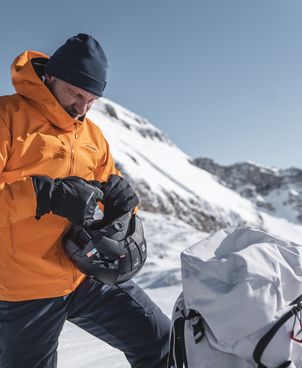
And since these are the clothes that will be seen when you are on the slopes, you can indulge in the design if you want a look that suits you. The men's collection for 2026/2027 offers you an infinite choice according to your desires: vintage look, discreet and trendy pastel shades, classic black, two-tone jacket, camouflage patterns, flashy colors, etc.
Winter boots or après-ski boots: the essential off-piste
During your stay, you will obviously not be constantly on the slopes, and you will need to dress appropriately when moving around the resort.
Then swap your ski pants for a lighter and more comfortable model, without neglecting thermal protection and potentially waterproofing.
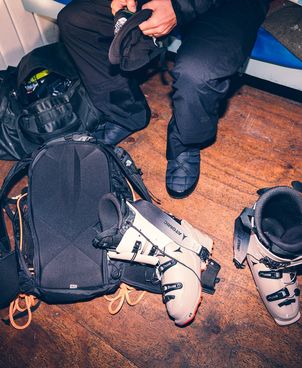
And above all, remember to buy suitable shoes! They must be waterproof, warm, and breathable, but also have a grippy sole with good lugs for walking in snow or on icy terrain. High or mid-cut hiking boots may be suitable, but the ideal is to opt for après-ski boots, specially designed for this use.
In current men's collections, the technical features of these après-ski boots combine perfectly with a refined style. If your look is important to you, know that outdated snow boots are far from the only models available and you can even opt for high-performance après-ski boots that look like city ankle boots.
Winter sports accessories: the essentials to complete your outfit
A men's ski outfit doesn't stop there: you now need to equip yourself with various accessories to perfect your protection against cold and humidity, without compromising on style.
Ski socks
The ski socks are essential for keeping your feet warm, but that's not all. They must be breathable to prevent moisture accumulation, which is why quality socks are often made from a blend of merino wool and technical synthetic fibers.
Also be sure to choose the right size: too small, they quickly become uncomfortable, and too large, they risk slipping and creating folds that will bother you. It is also important that they have reinforcements on strategic areas (heel, shin, etc.), for your comfort and their lifespan.
Ski goggles or glasses
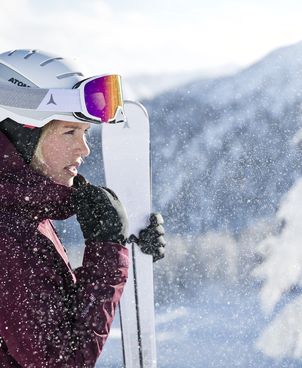
To face the sun's rays and the wind, it's impossible to ski without ski goggles or glasses. Goggles offer the best protection, especially in bad weather, thanks to a wide field of vision. There are models with interchangeable lenses to adapt to light conditions, but also with photochromic lenses that adapt automatically.
Sunglasses are rather reserved for sunny terraces or less demanding activities, but always with a high level of UV protection.
Ideally, you therefore need goggles and a pair of glasses for your winter stay in the mountains.
Neck warmer
More practical than a scarf, the neck warmer effectively protects the neck and lower face against cold and snow splashes.
In fleece, wool or technical fabric, it can be worn easily under the jacket without hindering, and despite its discretion, the neck warmer is an essential for retaining warmth.
Beanie
The beanie maintains body heat by preventing heat loss through the head and ears, which are particularly exposed to cold at altitude.
If you wear a helmet with good thermal insulation, the beanie is not useful when skiing. However, you will greatly appreciate it on cold days in the resort, and it can complement your outfit with style, whether you prefer the oversized beanie, the Peruvian style, the chapka or the more classic beanie, and in any color.
Mittens or gloves
Last essential accessories: ski gloves, waterproof and that insulate hands from the cold, while ensuring a good grip on poles.
For optimal warmth, mittens prove more effective than gloves, but also offer less dexterity. Otherwise, turn to heated gloves : their heating system and integrated battery allow you to stay warm all day.
Don't forget to also bring a pair of lighter gloves for other outdoor moments, for example for après-ski or for a hike in mild weather. They are available in fleece, leather, wool, etc., mainly in versatile colors like black, grey, and brown.
Sport 2000 tips for choosing the best men's ski clothing
Need to see more clearly to choose between the wide range of jackets, pants, technical clothing and ski accessories of all kinds? Here are some additional tips for putting together a quality ski outfit, which can accompany you through the seasons.
Trust recognized brands in the ski world
Even if it's your first time skiing or if you don't go to winter sports every season, it's important to choose quality products, even if it means paying the price. See it rather as an investment, which will allow you to enjoy a maximum of comfort during your stay and will save you from regularly buying new ski clothes.
For this, trust brands specializing in ski equipment, such as Odlo, The North Face, Salomon, Rossignol, Icepeak, Millet, Loubsol, Reusch, Thyo, etc.
Pay close attention to the size of clothing and accessories
Among other elements not to be overlooked, there is the size of socks, shoes and ski clothing.
This is far from trivial, because a size not adapted to your body shape can cause various problems, whether it is too small or too large: sensation of compression, hindered freedom of movement, poor thermal insulation, undesirable friction, etc.
If you buy in store, do not hesitate to ask sellers for advice and try several sizes. If you buy online, always try the products before your ski trip.
Do not prioritize style at the expense of functionality and technical performance
For both men and women, ski clothing and accessory collections sometimes catch the eye with their trendy side, their colors, etc. This is an important point if you want a stylish mountain outfit, but which should be among the secondary criteria.
Indeed, it is first and foremost the functional criteria that should allow you to make a first selection: waterproof clothing, materials with thermal properties that ensure breathability, comfortable material, good freedom of movement, etc.