Parabolic skis: what size to choose?
Appearing in the 1990s, carving skis now constitute the majority of models available on the market. What is the difference between a pair of carving skis and classic skis? How to choose the size of your skis based on your level and intended use? What other technical criteria should be considered? Sport 2000 shares its advice for the choice of your ski equipment , and more specifically for skiing with carving models.
In summary
Carving skis are today the most common models. Their wider shape at the ends facilitates turns, improves grip, and offers more stability than old classic skis. The choice depends on the skier's level, practice, size, and technical characteristics such as flex, rocker, or camber.
Difference between parabolic skis and classic skis
In 1993, a new alpine ski appeared and now makes up the majority of skis sold: the parabolic ski. This is the type of ski you will find among the Sport 2000 rental range, for adults and children.
These skis are characterized by their profiled shape, with a tail and tip wider than the waist (central part). They are also shorter than classic skis: 10 to 20 cm shorter than the skier's height.
These characteristics allow these new generation skis to be very responsive and to turn more easily. More stable than classic skis, with edges designed to diversify turns, they grip the snow more and help to limit falls more compared to classic skis. As you've understood, the parabolic ski is a must-have for ski equipment!
Choosing the size of your skis according to your level
Parabolic piste skis are generally narrow and shorter, to allow beginners and intermediate skiers to link turns more easily. A beginner should on average take skis 10 cm shorter than their height, with a wide waist for more stability (minimum 85 mm).
The intermediate skiers take skis 5 cm shorter than their height. There are also progressive skis for intermediate skiers, more performant than skis for beginners (designed to limit their mistakes as much as possible, especially when turning).
Only experienced skiers can take longer skis (5 cm longer than their height) to gain grip during speed peaks. There are even special skis designed for speed and competitions, like those that take place on the slopes ofAuron, Courchevel or Val d’Isère : the parabolic alpine ski "performance" and "racing", very responsive and rigid, to change edges and direction without losing speed.
If you don't want to limit yourself solely to on-piste skiing, there are parabolic skis intended for other uses, with different sizes.
Choosing your parabolic skis according to their use
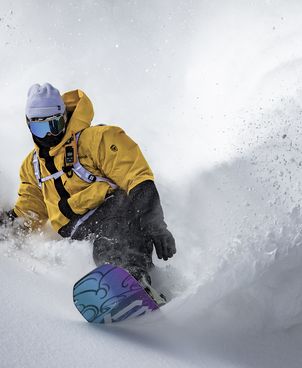
If you go off-piste skiing, you then need parabolic freeride skis, measuring between 5 and 10 cm longer than you and very wide (waist width between 90 and 120 mm) to gain more flotation in powder.
Conversely, touring skis will measure 5 to 10 cm shorter than you. Touring skis are specifically designed to allow both ascent and descent, offering you great freedom.
Do you also want to jump moguls in competition in Megève or do acrobatic skiing like at the X Games in Tignes ? Then you need freestyle skis, smaller than you (about 10 cm), but also lighter, for more maneuverability during your jumps.
If you want skis designed for both on-piste and off-piste, take a pair of parabolic all-mountain skis, wider than piste skis (with a waist measuring between 85 and 90 mm in width).
Other technical criteria to consider
Besides the size of your skis, other elements should be considered when choosing your equipment, depending on the discipline, the type of terrain and snow, your weight, your level, etc.:
Ski flex : The stiffness rating of a ski. A stiff flex is only for experienced and fast skiers. Beginners or powder enthusiasts are better off using a soft flex ski for more grip.
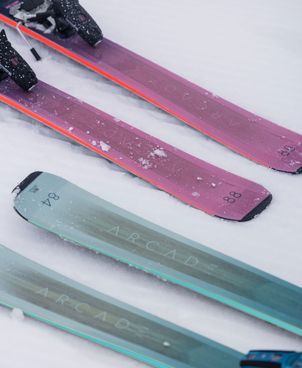
The width : This term refers to the width of the ski, wider skis are needed for more stability, for example for freeride and freestyle skis.
The rocker : Degree of upward curve of the parabolic ski at the tail and tip, providing more flotation.
The camber : Degree of ski camber, generally between 3 to 5 cm, except for freeride skis which can have reverse camber (only the waist touches the snow).
Skier's morphology : Small or light skiers should use short skis for more maneuverability. Heavy skiers should take longer skis to gain stability.
Classic ski
Parabolic ski
Shape
Uniform width
Wider tip and tail
Maneuverability
More technical
More accessible
Turns
Requires more commitment
Easier
Use
Experienced skiers
All levels
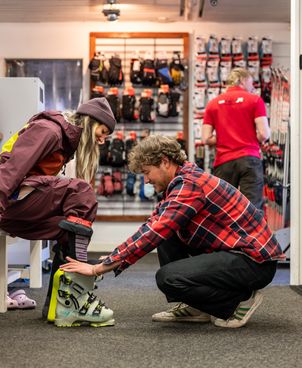
Don't forget to carefully choose your ski boots as well, just as important to enjoy your mountain stay in comfort.

FAQ
Frequently asked questions about parabolic skis
-
What is the difference between a classic ski and a parabolic ski?
The parabolic ski has a wider shape at the ends and is narrower in the center. This design facilitates turns, improves grip, and makes skiing more accessible than old classic skis.
-
What size to choose for parabolic skis?
The size depends on the level and practice. A beginner will generally choose a ski shorter than their height for greater maneuverability, while an experienced skier can use a longer model for more stability.
-
Are parabolic skis suitable for beginners?
Yes. Parabolic skis are particularly suitable for beginners thanks to their maneuverability and ease of turning. They allow for faster learning and confident progression.
-
What is a ski's rocker?
The rocker corresponds to the raised part of the ski at the tip or tail. It improves maneuverability and facilitates flotation in fresh snow.
-
What is the difference between parabolic and all-mountain skis?
A parabolic ski primarily refers to the shape of the ski, whereas an all-mountain ski corresponds to a versatile use allowing skiing on and off-piste.
-
Is it better to buy or rent parabolic skis?
Renting allows you to benefit from recent equipment each season, adapted to your level and adjusted by professionals. It is particularly interesting for skiers who want to test different models.