How to choose your ski mask well?
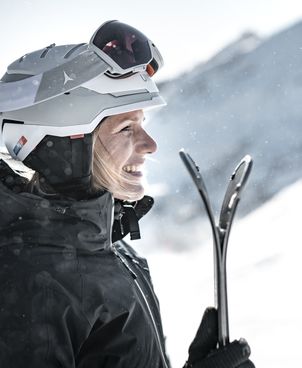
Being well-equipped before hitting the slopes is essential, and this doesn't just involve choosing skis or boots. Indeed, choosing your ski mask well is important, as it will allow you to always have a good vision of the environment, and therefore to ski safely, but also to enjoy an excellent level of comfort. Here are Sport 2000's tips for choosing your ski mask!
In summary
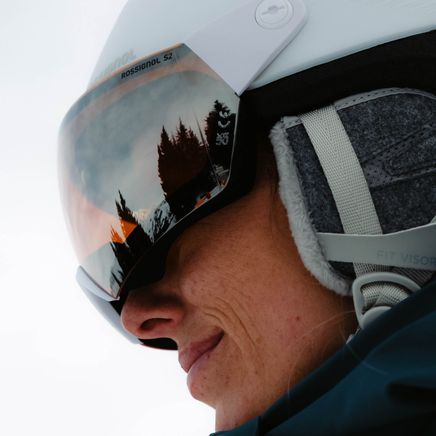
The ski mask offers more complete protection than classic glasses: UV, glare, cold, wind, rain, and projections, while better covering the face during possible collisions. All EN 174 certified masks guarantee 100% UV protection, regardless of the lens color. The choice of protection category depends on the weather: category 3 (8-18% light transmitted) for sunny days, category 2 (18-43%) for fog or low visibility. Photochromic technology automatically adapts the tint to light conditions. The lens color also influences the visual rendering: warm tints (orange, yellow, pink) to accentuate reliefs, brown to compensate for strong luminosity, mirrored effect to reduce glare. For sizing, refer to men's/women's/children's categories, with models adapted for thin or wide faces; prior fitting and strap adjustment are recommended.
Why choose a mask rather than glasses?
A few years ago, it was rare to see skiers with masks, most of them opting for glasses. Nevertheless, the trend has reversed, and for good reason: while glasses do protect skiers' eyes from UV rays, which are particularly strong in the mountains, their use is quite limited for everything else.
Unlike a simple pair of glasses, a ski mask will allow you to protect yourself from UV rays and sun glare, but also from cold, snow, wind and even rain. Indeed, even if it's sunny when you start your ski day, it's not guaranteed that the weather will stay clear all day and it's important to be prepared for all eventualities.
Similarly, wearing a ski mask covers the face better and thus allows to protect your eyes from possible projections of foreign objects like small stones, or pine branches. During collisions with other skiers, the ski mask will keep your eyes safe and prevent you from getting injured by poles or even the other person's skis.
What type of lenses to choose for your mask?
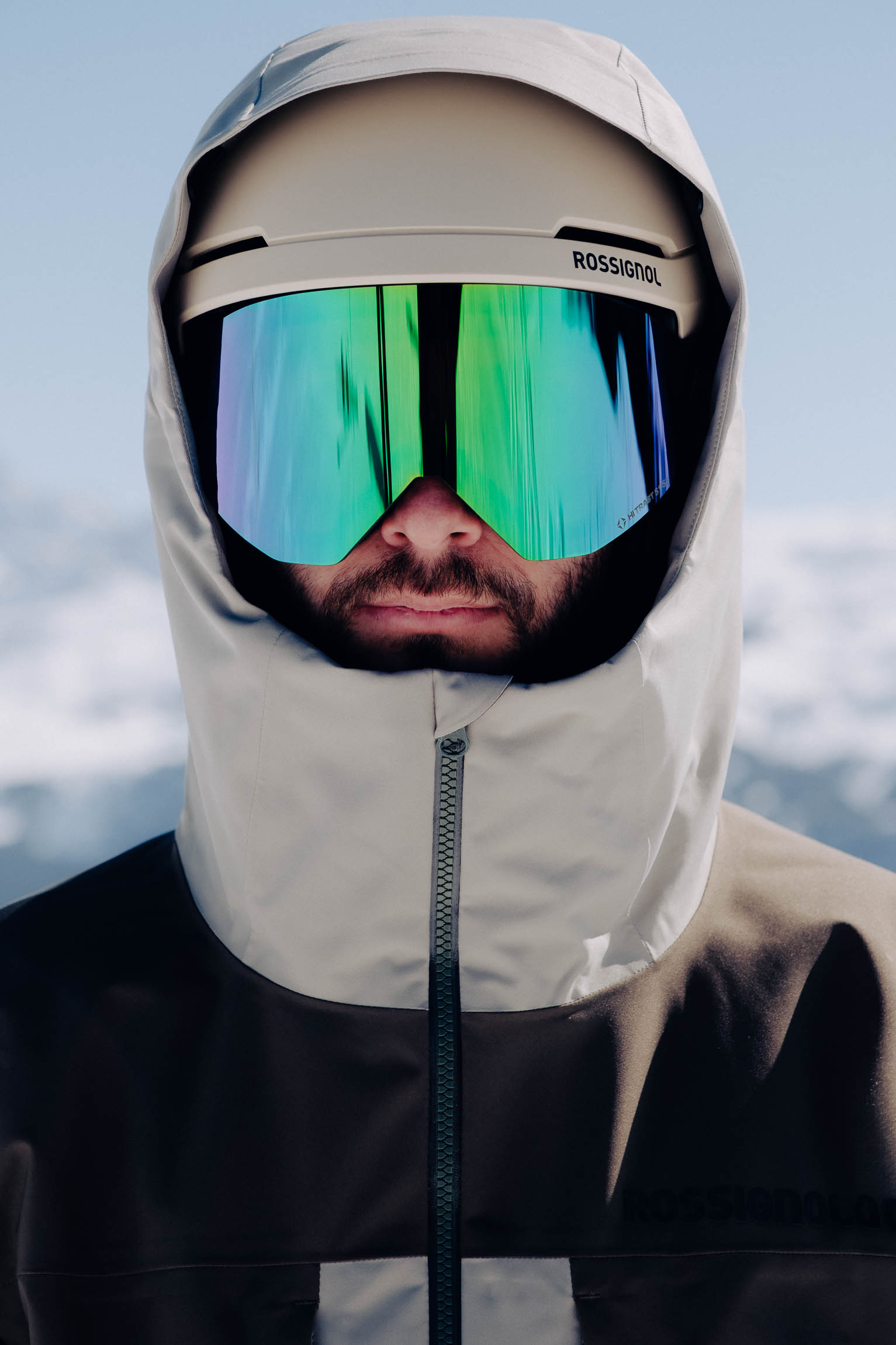
Choosing your ski mask involves choosing the lens, which can be yellow, pink, orange, grey, brown, mirrored, or photochromic, as well as the level of protection. But how do you find your way around?
The first thing to know is that the color of the lens has no impact on the UV protection provided by your mask. Indeed, all ski masks are EN 174 certified and therefore guarantee 100% UV protection. Nevertheless, there are several categories of protection, which are related to the light transmission rate.
To choose your ski mask, the ideal is to refer to the weather. Indeed, category 3 masks are recommended for sunny days, as they only let 8% to 18% of light pass through. However, if there is poor visibility and a lot of fog, a category 2 mask will be more appropriate, as it lets 18% to 43% of light pass through.
Let's not forget the mask with photochromic technology : the lens tint adapts according to the amount of UV, offering optimal protection and visibility in all conditions.
The color of the lenses is not just aesthetic, so it must also be taken into account when choosing your ski mask. Indeed, warm tints (orange, yellow, pink, red) accentuate reliefs, while brown compensates more for stronger light. Mirrored masks reduce glare. The ideal is therefore to try several and see which one seems most comfortable to you.
How to choose the size of your mask?
A ski mask of the right size is essential for every skier: it offers a good field of vision, stays in place, and ensures comfort. But how to find the one that suits you? First, turn to the category that corresponds to you: men's, women's or children's. If you have a particularly thin face or a face wider than average, there are masks designed for you.
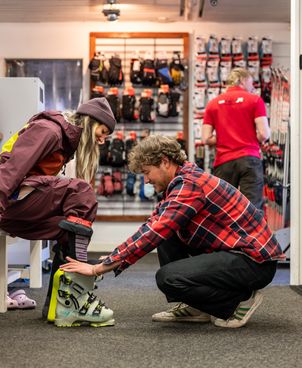
In any case, it is important totry on the ski mask before buying and to adjust it properly. All masks have a strap that allows adjustment of the tightness around the head.

Should you opt for a mask with specific technologies?
Ski equipment brands regularly innovate to offer increasingly high-performance and practical ski and snowboard masks. If you ski regularly, or if you simply want maximum comfort, you can choose a model integrating:
some interchangeable lenses, to adjust the type of lens according to the brightness;
a anti-fog treatment with dual-lens technology, to maintain perfect vision all day long;
a technology designed to improve the visual experience, thanks to a lens that improves contrasts, intensifies natural colors, enhances the perception of reliefs, etc.
Obviously, the more technologies and options the mask incorporates, the higher its price will be. The choice therefore also depends on your budget and how often you go on ski holidays. On average, for a mid-range mask, the price ranges between 25 and 60 euros for a children's model, and between 50 and 100 euros for a men's or women's model.
What about eyeglass wearers, then?
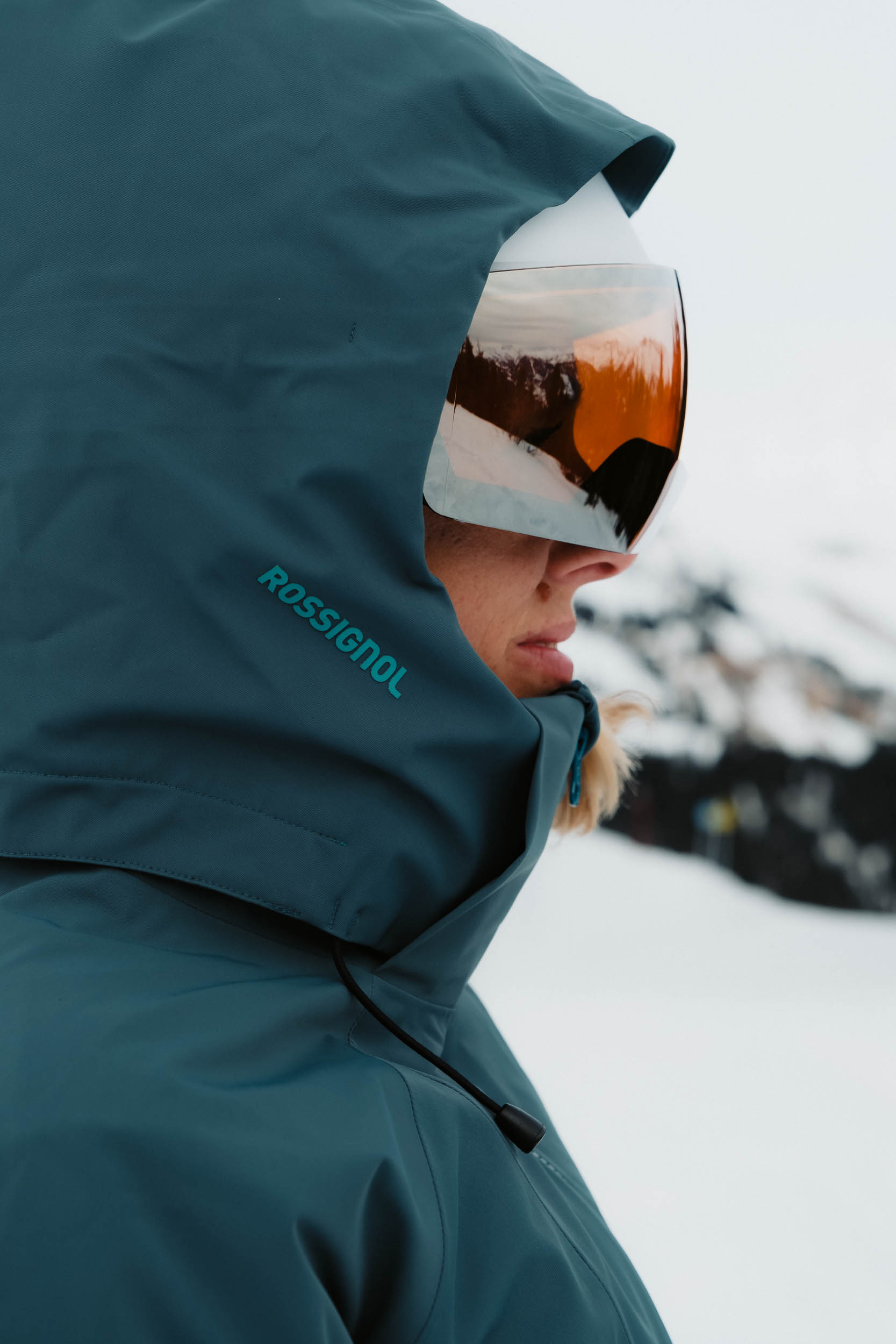
Do you need eyeglasses to see clearly, and are you wondering how you're going to combine them with a ski mask? Don't worry, choosing a ski mask is not much more complicated for eyeglass wearers; you just need to opt for an OTG mask: Over The Glass.
Offered by many ski equipment manufacturers (Oakley, Julbo, Cairn, etc.) and available in Sport 2000 stores, OTG masks are equipped with a small notch in the foam at the temples, designed to accommodate the arms of eyeglasses. Thus, you can slide your glasses under the mask and enjoy the benefits of the ski mask without any discomfort!
Need more advice to prepare your winter mountain stay? Discover our guides for choosing equipment and sliding accessories: ski helmet, snowboard, children's ski boots, etc.

Rent your skis with Sport 2000
The guarantee of quality equipment and service