Classic cross-country skiing and skate cross-country skiing: what are the differences?
Relatively similar at first glance, notable differences between classic cross-country skiing and skating do exist, however. Besides the skier's posture which changes for each of these disciplines, the equipment is not the same. And while cross-country skiing is easier to master, skating requires more perseverance and energy to appreciate all facets of this sport. In terms of equipment, cross-country skiing and skating are also different. Discover all our tips in this guide!
In summary
Main difference: classic cross-country skiing uses the diagonal stride (gliding walk) on parallel tracks, accessible to beginners; skating uses the skater's stride, which is more technical and faster, without a dedicated track, it is the biathlon discipline. The equipment differs: classic skis are longer, with a grip zone and anti-recoil system; skate skis are shorter, rigid, without grip. Skate poles are longer. As for boots, classic favors a low and flexible cuff, skating a high and rigid cuff to support the ankle. Classic is suitable for beginners, skating for more experienced skiers with good physical condition (taught notably in Font-Romeu, Megève, Villard-de-Lans). At Sport 2000, rental includes advice on binding adjustment and choosing suitable equipment.
The movement, major difference between classic skiing and skate skiing
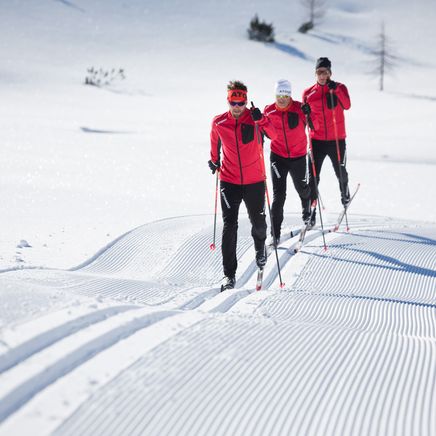
The traditional cross-country skiing (or Nordic skiing) relies on the technique of the gliding walk (also called diagonal stride), consisting of reproducing the walking motion by lifting and pushing off each leg. You push simultaneously on your poles, to accompany the movement with your arms.
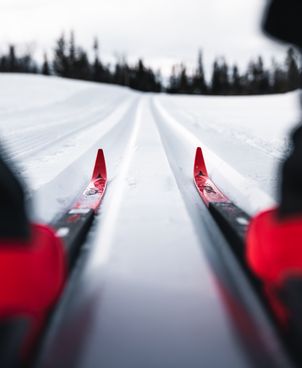
Thus, for classic cross-country skiing, one generally follows the track of 2 parallel rails. These are ski tracks left by previous skiers, or prepared by the resort managers. However, it is still possible to practice this winter sport on a sufficiently groomed snow.
On the contrary, skate skiing consists of moving forward by making gliding steps (also called "skater's stride", because they are similar to the motion performed in ice skating). If you have no idea what it looks like, watch a biathlon competition: athletes use the skater's stride, and move forward with their feet and legs « duck-footed ». This discipline is more demanding, but also allows you to gain more speed. The legs are not the only ones working: the arm movement with the poles is essential to go faster and to be able to climb uphill.
In both cases, remember that these winter sports are practiced on dedicated trails. Do not consider putting on cross-country skis at the foot of an alpine resort's slopes or off-piste!
Ski equipment: characteristics specific to each discipline
Since classic cross-country skiing and skate skiing are not practiced in the same way, the equipment is therefore different.
Differences in skis
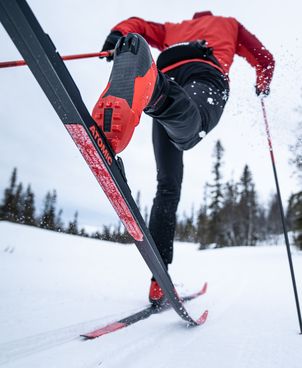
Underneath skis intended for classic technique, a grip zone (with scales, wax, or skins) allows for better grip on the snow. Classic cross-country skis are also equipped with an anti-recoil system, to assist the skier's movement.
On the other hand, there is no grip zone under the foot of skate skis, which are smaller and with a smaller tip than on classic cross-country skis... Skate skis are also stiffer.
As for the ski length, it is generally longer for classic skiing than for skating.
Let's also note a distinction in bindings: cross-country ski bindings are both narrower and lighter than skate ski bindings.
Finally, skate poles are longer than those intended for classic cross-country skiing (the latter should reach your shoulders).
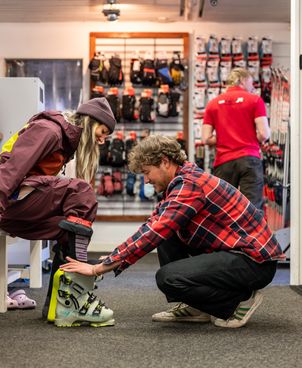
If you are a bit lost with all these technical characteristics, rest assured: by renting your equipment from a Sport 2000 store, the team will be able to advise you. Ski length, binding adjustment according to your weight, type of boot, cross-country skiing style adapted to your level, etc., nothing will be left to chance so that you can set off serenely on the Nordic trails.
The specific characteristics of cross-country ski boots
Unlike alpine or ski touring boots, cross-country ski boots are not completely rigid. But is there a difference depending on the Nordic skiing style practiced?
There are versatile boots for practicing both cross-country and skate skiing. Nevertheless, it is advisable to opt for boots specifically designed for one or the other of these disciplines.
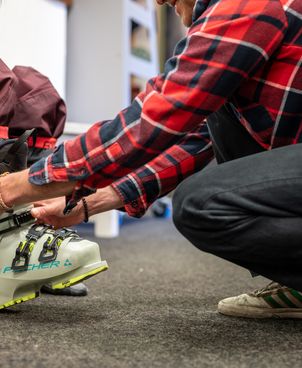
Designed to facilitate the diagonal stride and propulsion, classic cross-country ski boots are relatively low, equipped with a medium cuff and a more flexible sole ; while skate ski boot soles are quite rigid, to accompany the skater's stride and the alternation of each pushing leg. Skate boots are also higher, so that their cuff provides maximum ankle support.
How to choose between classic skiing and skate skiing?
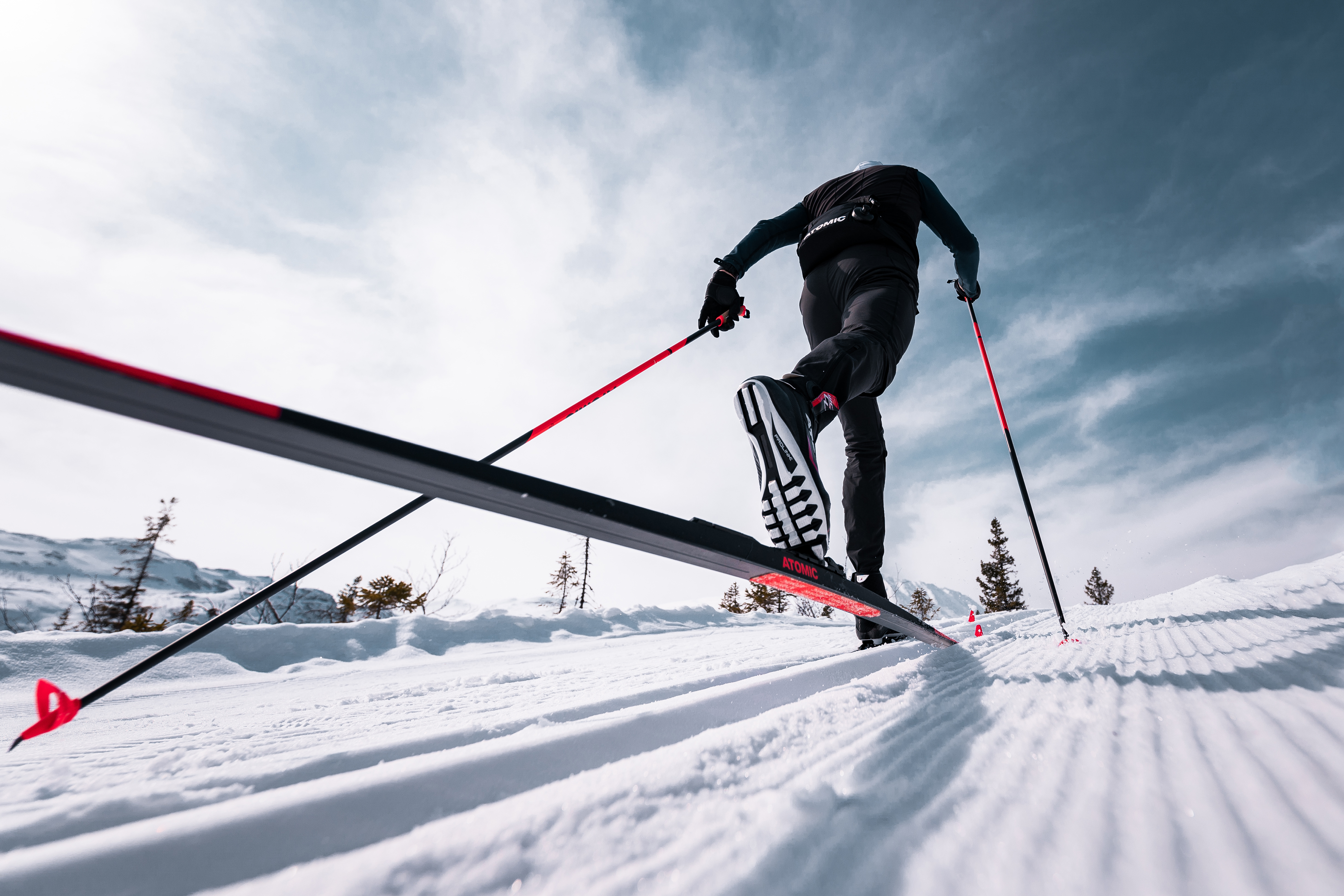
While the 2 disciplines are quite unique, each allows for a good time. It is easier to start cross-country skiing than skating, with the latter appealing to more experienced skiers, which constitutes an additional difference between cross-country and skate skiing.
Nevertheless, if you are already comfortable on skis and have good physical condition, nothing prevents you from trying skate skiing, and why not an introduction to biathlon ! Skate skiing is indeed the type of ski used for biathlon events (mixing skiing and rifle shooting), which has been enjoying growing success for several years. Some resorts offer to learn this winter sport in a fun way, such as Font-Romeu, Megève or Villard de Lans.
Of course, you can also use the services of a mountain guide to discover the technical basics of classic skiing and enter the wonderful world of cross-country skiing. In France, resorts with a Nordic domain and competent instructors are not lacking!