What are the different types of cross-country skiing that exist?
Would you like to discover a new style of gliding? Get out of your comfort zone and enjoy the snowy landscapes? Why not try cross-country skiing ? We explain the different techniques and associated equipment to help you find the practice that suits you.
Also know that classic cross-country skiing has given rise to many subcategories: skating, touring skiing, ski snowshoes, telemark... What are the characteristics of each of them? Are there versatile skis among these categories, allowing to combine the advantages of cross-country and alpine skiing? Let's analyze these in more detail technical winter sports, but accessible.
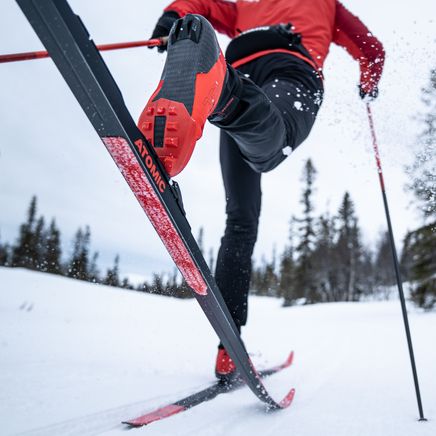
In summary
Cross-country skiing comes in several disciplines: classic cross-country skiing (alternate stride, skis 20-25 cm longer than height, accessible to beginners), skating (skater's stride, more technical, skis 10-15 cm longer than height), Nordic skiing (off-piste in deep snow, wider skis with edges, no descent possible), touring skiing (mix of cross-country/alpine, detachable heel, climbing skins for ascent), telemark (free heel, technical turns by flexion-extension) and ski snowshoes (small wide skis for floating, allowing descent). Where to practice: Font-Romeu, Les Saisies, Névache, La Clusaz, Les Rousses, le Sancy, among other Nordic areas in France. At Sport 2000, renting packs (skis + boots + poles) guarantees equipment compatibility depending on the practice (classic or skating), with maintenance options (waxing, adjustments).
The different types of original cross-country skiing
If you are considering practicing cross-country skiing on dedicated trails, several styles are accessible: discover each type of cross-country skiing in more detail.
Classic cross-country skiing
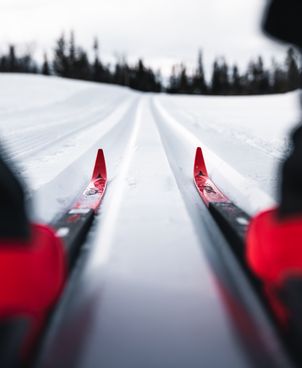
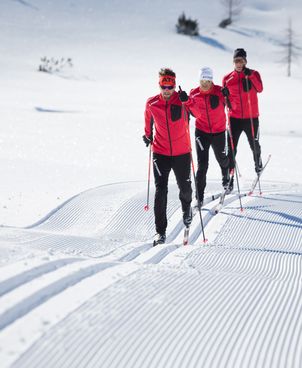
This is cross-country skiing that reproduces the walking movement (called diagonal stride). Unlike some forms of cross-country skiing, classic cross-country skiing has the advantage of being easy to practice, regardless of the presence of existing tracks left by skiers or the condition of the snow. For beginners, the classic version of cross-country skiing therefore provides a good introduction.
Cross-country skis differ from other similar ski models by the presence of a grip zone under the binding (under the foot) to provide propulsion, and smooth zones at the front and back of the ski.
Cross-country skis are also distinguished by their significant length, as they measure on average 20 to 25 cm longer than the skier's height.
Skate cross-country skiing
Invented just after classic cross-country skiing, skate skiing is a slightly different form of skiing. Indeed, the skier progresses by performing skater's strides (it is also the cross-country skiing discipline of biathlon). Based on gliding, with almost permanent use of poles for propulsion, skating is a little more technical than classic cross-country skiing.
Skate skis are shorter than classic cross-country skis (10 to 15 cm longer than the skier's height).
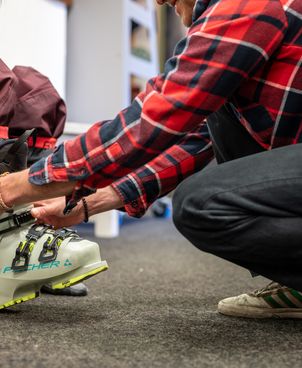
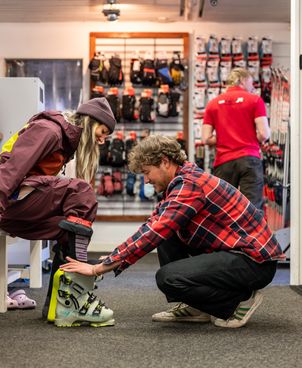
What about cross-country ski boots ? There are versatile boots for both classic and skate cross-country skiing, or models specifically designed for each category. When you rent equipment from a Sport 2000 store, you get a complete cross-country ski pack (with poles included) : you therefore don't have to worry about the compatibility of the boots with the chosen ski type.
Nordic skiing
Nordic skiing is a form of cross-country skiing designed for off-piste skiing, in deeper snow. So, even if the boots are quite similar, these skis are wider than classic or skate cross-country skis. They are also equipped with metal edges, to better grip snow or ice.
However, Nordic skis are not suitable for downhill skiing.
The different existing ski categories inspired by cross-country skiing
Aside from classic cross-country skiing practiced in a Nordic area, the world of snow sports includes several similar disciplines, to be practiced on dedicated routes, on alpine ski slopes or off the beaten path.
Ski touring
Ski touring (not to be confused with freeride skiing) is a hybrid version of classic cross-country skiing and alpine skiing. The user can detach the heel from their bindings to climb steep terrain without difficulty. The skis are equipped with skins and are lighter, making the ascent easier.
Then, the skier fixes their feet and can ski downhill, like with alpine skis. Off-piste skis are significantly wider than classic cross-country skis, in order to provide good flotation in powder snow.
This sport requires a good level, both in terms of physical condition and skiing ability.
Telemark skiing
Among the different types of cross-country skiing that exist, Telemark skiing stands out significantly. Its particularity is its heel detached from the binding, and knowing how to make turns requires great mastery of flexion-extension, especially to handle terrain difficulties (bumps, very steep slopes, etc.). It is a technical discipline, which you can however learn from certain instructors or during discovery days organized in resorts.
Ski snowshoes
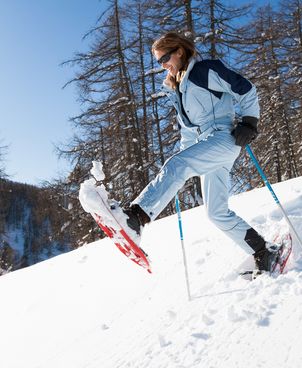
Ski snowshoes are small alpine skis, although quite wide, in order to float on the snow, and in this respect similar to snowshoes. One can easily explore snowy landscapes with them, since, like classic cross-country skiing or snowshoes, it is possible to detach the heel from the bindings. Besides their small size, the difference with other types of cross-country skiing that exist is that once the boots are attached to the bindings, skiers can descend slopes. Nevertheless, these skis do not allow reaching the same top speeds as with freeride or touring skis.
Where to go cross-country skiing?
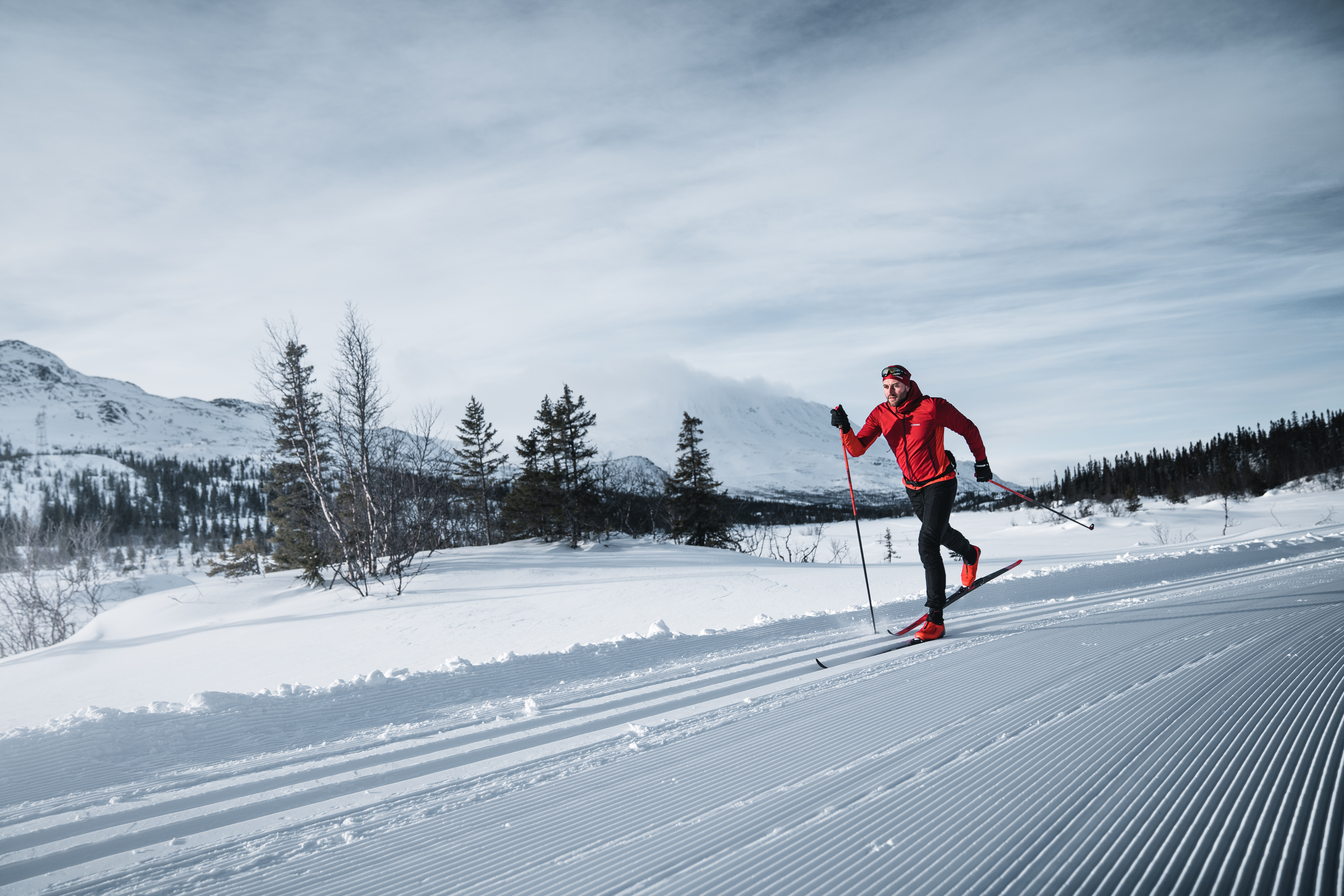
In France, there are ski resorts with quality spaces dedicated to cross-country skiing, such as Font-Romeu, Les Saisies, Névache, La Clusaz, Les Rousses, the Sancy domain, etc. In all French massifs, it is thus possible to indulge in this winter sport, far from ski lifts, often in a lush and preserved nature, offering splendid landscapes. Some resorts, more intimate, are moreover exclusively reserved for cross-country skiing.
If it's your first time, don't hesitate to take a few hours of lessons with an ESF instructor : he will help you to understand the skating or diagonal stride, to position your foot correctly and to adopt the right technique to enjoy yourself on the slopes, on flat ground as well as uphill or downhill. However, lessons are not just for beginners: you can also call on an instructor to improve your technique and gain speed.
To have the right equipment, or to maintain your own equipment (base waxing, adjustments, etc.), think of Sport 2000 stores. Many of them offer adult pack rental, and sometimes child, for skate skiing or classic movement.