How to choose your freestyle skis?
Still little known a few years ago, freestyle skiing attracts more and more snow sports fans every year looking for new thrills.
Sport 2000 guides you with expert advice on how to choose your freestyle skis how to choose your freestyle skis, whether you are a beginner, intermediate, or more experienced skier!
In summary
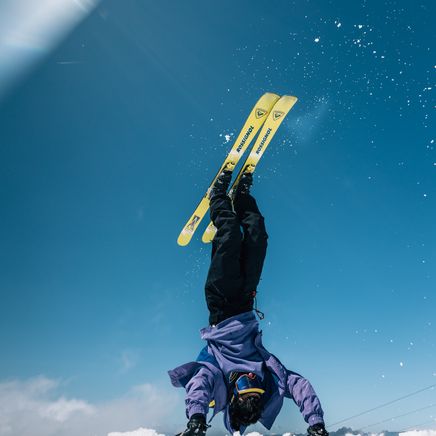
Freestyle skis are designed for performing tricks, jumping, and riding in snowparks or backcountry. They are distinguished by their twin tips, maneuverability, and shock absorption capabilities. The choice depends on the skier's level, the practiced style, and the ski size.
What differentiates a freestyle ski from a classic ski
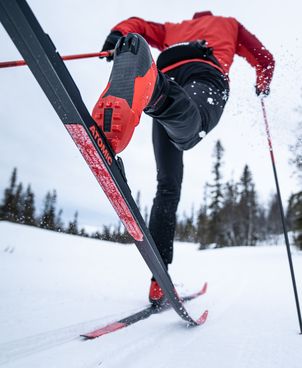
Knowing how to choose your freestyle skis is important, as it is a discipline very different from alpine skiing or cross-country skiing. The constraints are therefore not the same, and the characteristics are thus very specific. Indeed, skis used for freestyle must be lighter and offer more maneuverability, but also have better shock absorption. But what exactly do they have more than your standard alpine skis?
Firstly, freestyle skis have the particularity of being equipped with a twin tip, which means that the tail and the front of the ski have the same shape, unlike alpine skis or cross-country skis. We speak of "twin-tip" skis. This criterion is essential because it is thanks to it that freestylers can ski forwards as well as backwards. Some models are also equipped with two rockers : a raised tip at the front and back.
Knowing how to choose your skis also means opting for skis with a camber specifically designed to absorb shocks. This is why freestyle skis often have a flat camber.
Thus, when the freestyle skier performs tricks and lands, the ski ensures a softer reception, better for the equipment as well as for the athlete's joints.
Finally, the flex is often soft, to get more rebound during jumps, facilitate certain tricks, and better absorb shocks upon landing. But there are also freestyle skis with a stiffer flex, ensuring more stability and better edge hold.
A freestyle ski therefore has a large number of particular characteristics, both in terms of size (length, waist width, tip and tail width) and shape (rocker, camber, etc.), to meet the demands of this thrilling winter sport.
What size ski to choose for freestyle?
To know how to choose your freestyle skis and more precisely their size, it is necessary to take into account several factors: the skier's level, their weight, and the freestyle style they wish to practice, as there are several variants.
For backcountry, which is freestyle practiced off-piste on natural obstacles, it is advisable to choose a ski with a length = your height - 5 to 15 cm.
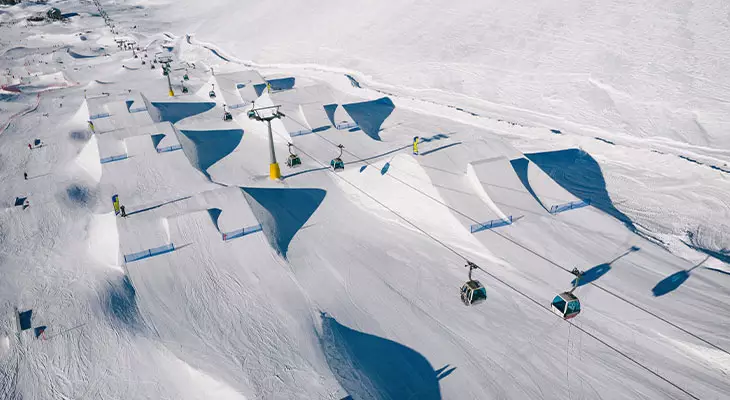
For slopestyle, which is practiced on man-made obstacles, or for freestyle practiced in the Snow park, a ski that comes up to your height or just below will be perfect
For classic freestyle performed mostly on the slopes of ski resorts, you can opt for a ski measuring 10 cm less than your height
Whatever your level or the freestyle style you want to practice, you will find a suitable pair of skis on our online store, but also in our Sport 2000 ski rental shops. In addition to benefiting from skis from the best manufacturers (Volkl, Atomic, K2, Black Crows, Faction, etc.), our teams will be able to provide you with their valuable advice on choosing the type of ski and bindings that perfectly meet your level and your requirements. They can also take care of adjusting the bindings according to your weight, boot size and level.
Note that when renting freestyle skis (just like for alpine skis for the piste, freeride skis for powder, all-mountain skis for versatile use, etc.), poles are included. As with skis, poles are generally lighter and shorter in freestyle, which offers more freedom and maneuverability during jumps.
Starting freestyle safely
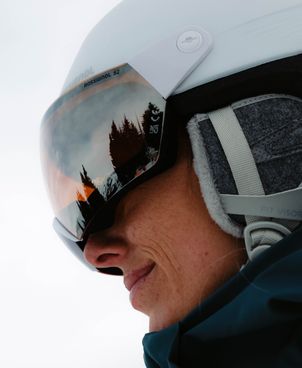
Freestyle is a very different practice from alpine skiing, which is why it is essential to choose your freestyle skis carefully, but also to equip yourself with all the necessary equipment to practice this discipline safely. For this reason, we offer you to find on our website, as well as in all our Sport 2000 stores, helmets dedicated to freestyle skiing. The helmet is highly recommended for all skiers, and even more so for freestylers, whether in backcountry, on piste or in the Snow Park.
Similarly, do not hesitate to equip yourself with wrist protectors, because freestyle is a complicated discipline that necessarily involves many falls when you are starting out. You can also opt for back protectors which will protect your lower back, neck and spine in the event of a fall on your back.
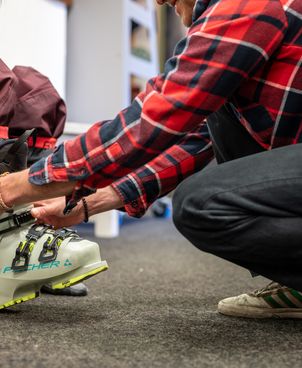
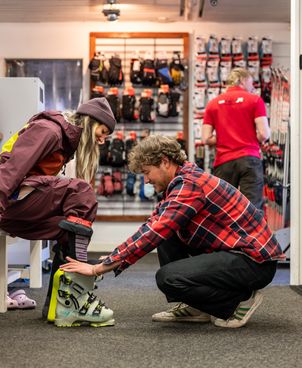
Good to know: freestyle skiing is practiced with specific ski boots that are particularly tight to accompany the movements of athletes. Choosing your freestyle skis must therefore also include the choice of appropriate boots.
Are you looking for other sensations than those provided by freestyle, on piste and in powder snow? Sport 2000 also guides you in the choice of a suitable snowboard, gives you advice on finding the right pair of all-mountain skis, helps you progress to ski in bumps, etc.

FAQ
Frequently asked questions about how to choose your freestyle skis
-
What is a freestyle ski?
A freestyle ski is a ski designed for performing tricks, jumps, and evolving in environments like snowparks or the backcountry. It generally has a twin tip, which allows you to ski forwards as well as backwards.
-
What size to choose for freestyle skis?
The size depends on your level and your practice. For snowparks, a ski close to your height or slightly shorter is often recommended. For backcountry, a longer ski will provide more stability and flotation.
-
Can you start freestyle skiing with classic skis?
It is possible to discover some freestyle sensations with alpine skis, but a freestyle ski is preferable for progression. Its specific construction facilitates tricks, landings, and switch gliding.
-
Are freestyle skis suitable for piste skiing?
Yes, some freestyle skis allow you to ski on piste, notably thanks to their maneuverability. However, they will be less efficient than a classic alpine ski for speed and large turns.
-
What is the difference between a freestyle ski and a freeride ski?
The freestyle ski is designed for tricks, jumps, and maneuverability. The freeride ski prioritizes flotation and stability in deep snow.
-
Do I need a helmet for freestyle?
Yes. A helmet is highly recommended for freestyle, as this discipline involves more falls and jump landings.