Ski and snowboard glossary: words to know
The world of snow sports can be particularly technical, and it borrows many words from English. It is therefore not uncommon for some terms to be a bit complicated to understand. To avoid misunderstandings, to fully understand content about skiing and snowboarding, and to express yourself like a snow sports pro, here is a ski and snowboard glossary of terms you absolutely need to know!
In summary
Ski and snowboard terms can quickly become confusing when starting out in the mountains. However, understanding the vocabulary of slopes, equipment, and techniques is essential to better follow advice, choose your gear, and enjoy your stay. With this glossary offered by Sport 2000, discover the main words to know before putting on your skis or snowboard. Continue reading to easily enrich your winter sports vocabulary.
Glossary of different winter sports disciplines
All-mountain : refers to equipment capable of performing on all types of snow. We speak of all-mountain ski to define a versatile ski, equally suitable for on-piste skiing and powder snow.
Backcountry Freestyle : a discipline halfway between freeride and freestyle, which consists of evolving off-piste while using natural elements to perform jumps and tricks.
Note: in English, the term "backcountry skiing" refers to ski touring. It involves performing tricks on kickers carved off-piste (backcountry), using natural elements such as a combe, a cornice, a tree... Backcountry freestyle skis are wider than classic freestyle skis because riding and landings are done on unprepared snow.
Big Air : a freestyle discipline that involves launching off a large jump to perform a trick. We also speak of Big Air Bag when the landing of the jump is equipped with a large inflatable mattress for a safer landing.
Freerando : discipline halfway between freeride and ski touring, which consists of taking the ski lifts, then moving on foot to find untouched routes for the descent. It's a mix between alpine skiing and ski touring. The goal is to exit at the arrival of a ski lift or at a bend in a piste and reach a summit or a pass, with an average of 30 minutes of ascent. The skis are equipped with bindings allowing touring with skins. The usual safety equipment (bag with avalanche beacon, shovel, and probe) is mandatory.
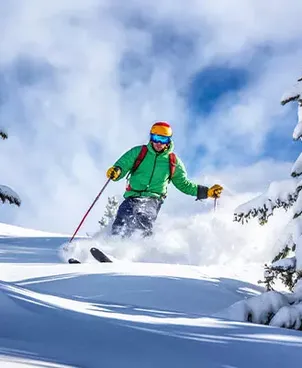
Freeride : practice of off-piste skiing, i.e., outside marked trails, in more or less deep powder snow. If the difference between freeride and good old off-piste seems futile, it is in fact essential: in both cases, it's about skiing outside the markers, if possible in powder snow, but in freeride, no more wedeln! Freeride skis, wider (from 85 mm at the waist to 120 mm for big freeride) and with a tip that floats, allow playing with the slope: big curves, "on the lip" turns... We exploit the best of the terrain thanks to an XXL bearing surface, so superior to that of straight skis.
Freestyle : ski practice focused on performing jumps and tricks, generally in snowparks, but also sometimes off-piste. Freestyle has put away the good old spread-eagle jumps. With two tips, a carving-oriented shape, a strong tendency to pivot, freestyle skis allow for all fantasies. It's up to you to set the limits...
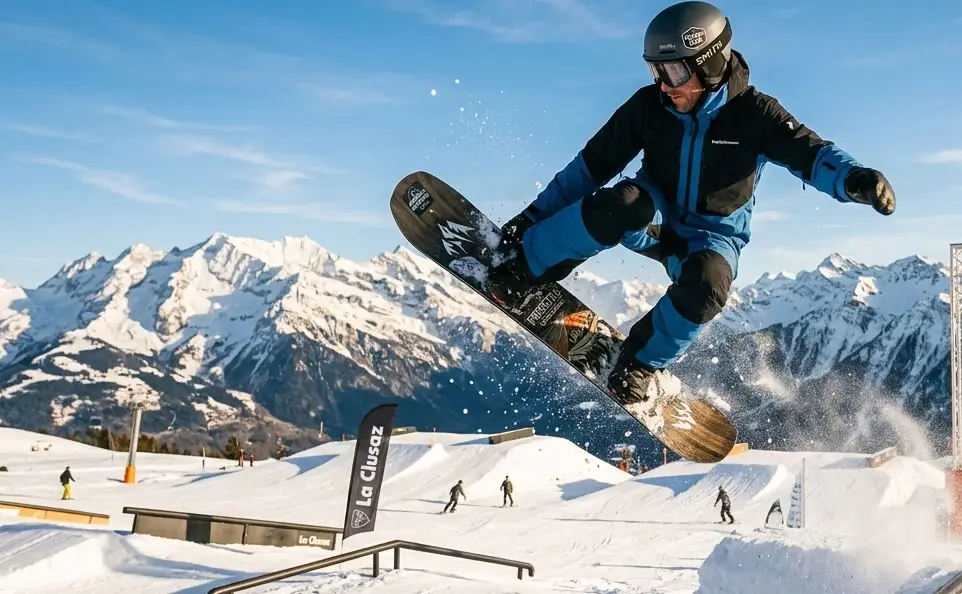
Half-pipe : a freestyle discipline that consists of descending a half-pipe ("U"-shaped) track, and performing tricks on it.
Kicker : a snow bump used as a jump in freestyle skiing.
Monoski : a wide ski board, on which both feet are placed side by side, in the direction of the board (and not perpendicular to the board as with a snowboard).
Rail : a metal bar found in snowparks, used for tricks and slides.
Classic cross-country skiing (alternate stride) : a cross-country skiing discipline practiced in parallel tracks, where the skis remain in line with the track and one moves forward by pushing with the arms or by alternating left and right foot.
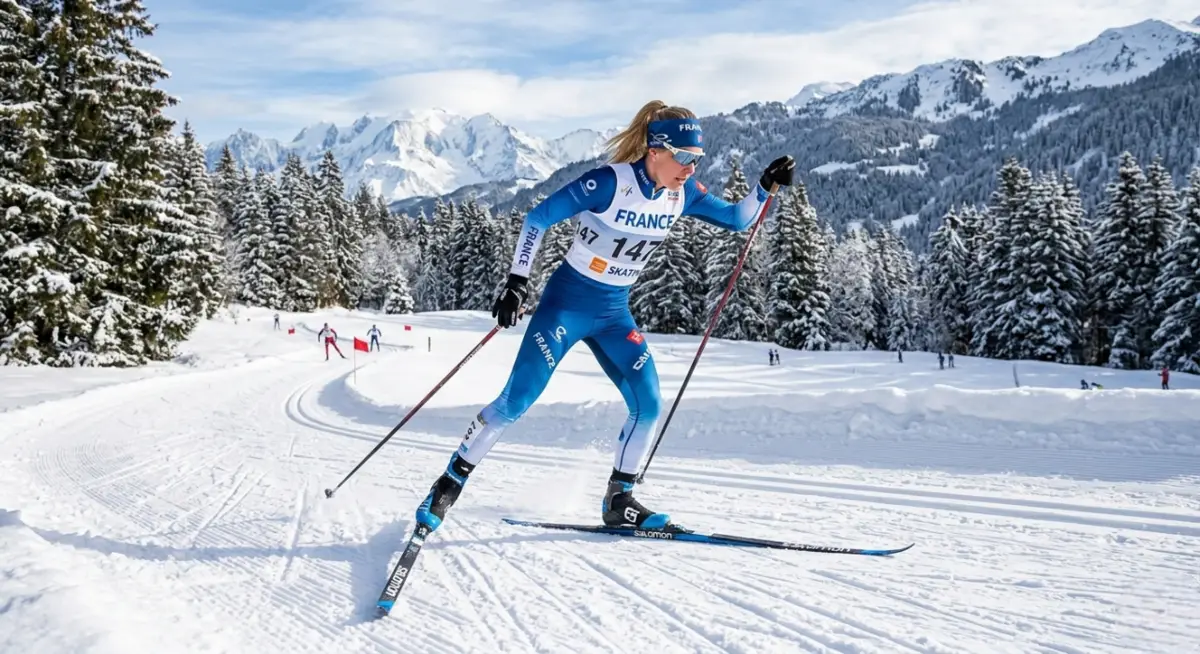
Skate cross-country skiing (skater's stride) : a cross-country skiing discipline practiced off-track, where propulsion is achieved by lateral pushes of the V-shaped skis, in a movement similar to skating.
Skiercross : With skiercross, alpine skiing has gotten a good dose of vitamins! Inspired by motocross, skiercross is a set of difficulties and obstacles grouped on a course marked by gates, on which four skiers start simultaneously. The first to arrive wins... It is also possible to go alone, attacking the clock!
Slope Style : Slopestyle is to freestyle what skiercross is to piste: a condensed mix of skiing styles. A slopestyle course brings together, on a single run, all the modules offered by freestyle: quarters, table, rails, and finally a half-pipe... The skier must link all these modules as best as possible. Much more complete than big air, slopestyle is becoming the benchmark competition format in freestyle, along with the half-pipe.
Splitboard : a snowboard that can be divided into two parts to transform into a pair of skis. This type of equipment is used to ascend like ski touring and descend on a snowboard.
Telemark : a practice located between alpine skiing and Nordic skiing, which consists of descending slopes with the free heel.
Glossary of snow and weather conditions
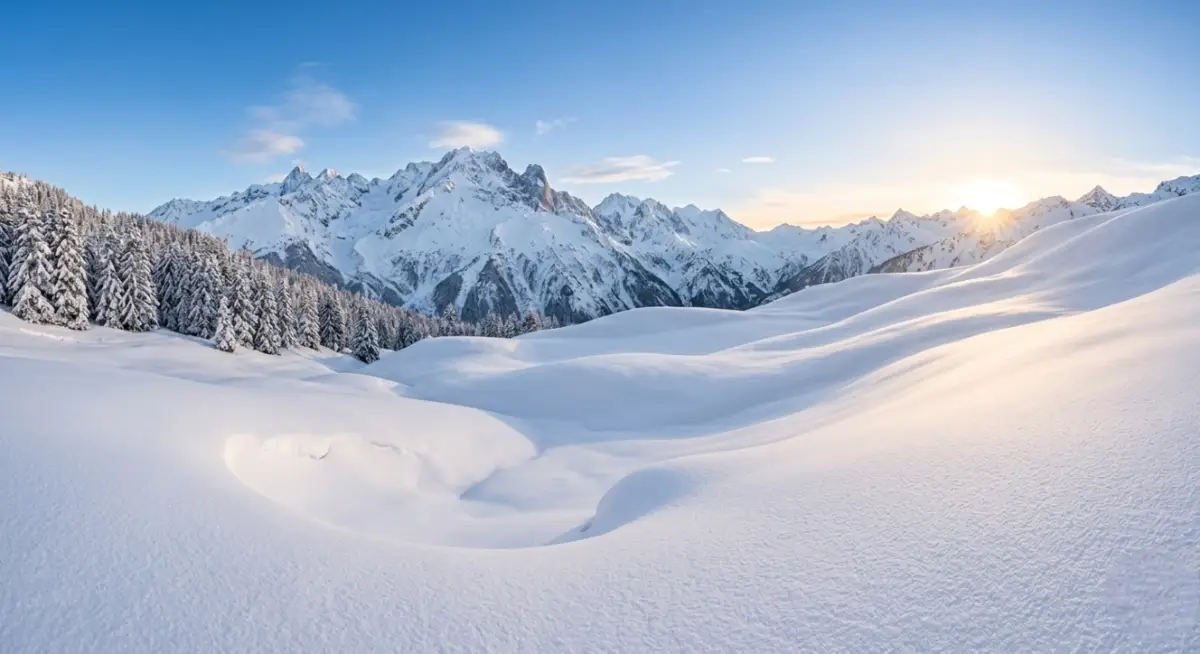
Dump : heavy snowfall.
Whiteout : a day with poor visibility, where it's difficult to distinguish the sky from the ground, due to low clouds or fog.
Chopped snow : irregular snow, a term often used off-piste to describe fresh, ungroomed snow, but in which traces of previous passages can be seen.
Powder or pow-pow : informal terms for powder snow.
Pea soup : dense fog, which causes very poor visibility on the slopes.
Generic vocabulary for sliding sports
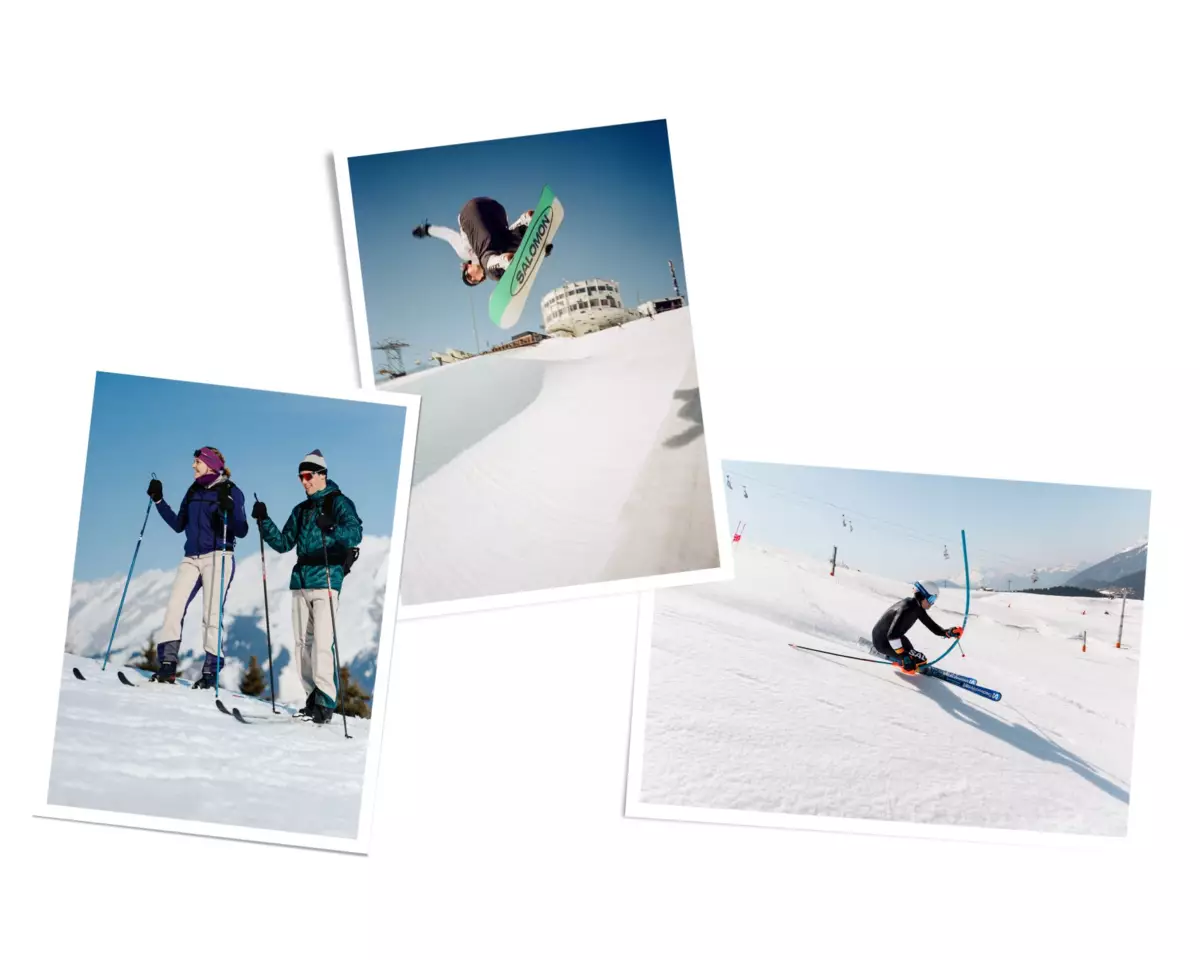
Edging : maintenance operation for a ski or snowboard, which consists of restoring edge grip, to regain a sharp edge so that the equipment has good grip on the snow
Unclip : to detach the ski from its binding. One can say "unclip" when simply taking off skis, or when the ski and the binding separate by themselves to prevent a major injury or fall.
Planing : to make the ski tip emerge from the snow. We mainly speak of planing for freeride or all-mountain skis, which must be able to emerge from deep snow.
DVA : acronym for "Avalanche Victim Detector", it is a device that allows locating a person buried under snow, provided that they also have a DVA device.
Wax : also called "wax", it is a specific product that is applied to the ski base to protect it and improve gliding.
Overmolding : process of ski repair, which consists of covering the entire base with a specific material, to fill holes, rough spots, etc.
Glossary of equipment and its technical specifications
Camber : natural curvature of a ski or snowboard, when laid flat without weight on it.
Edge : metal edge that surrounds the base of the ski or snow.
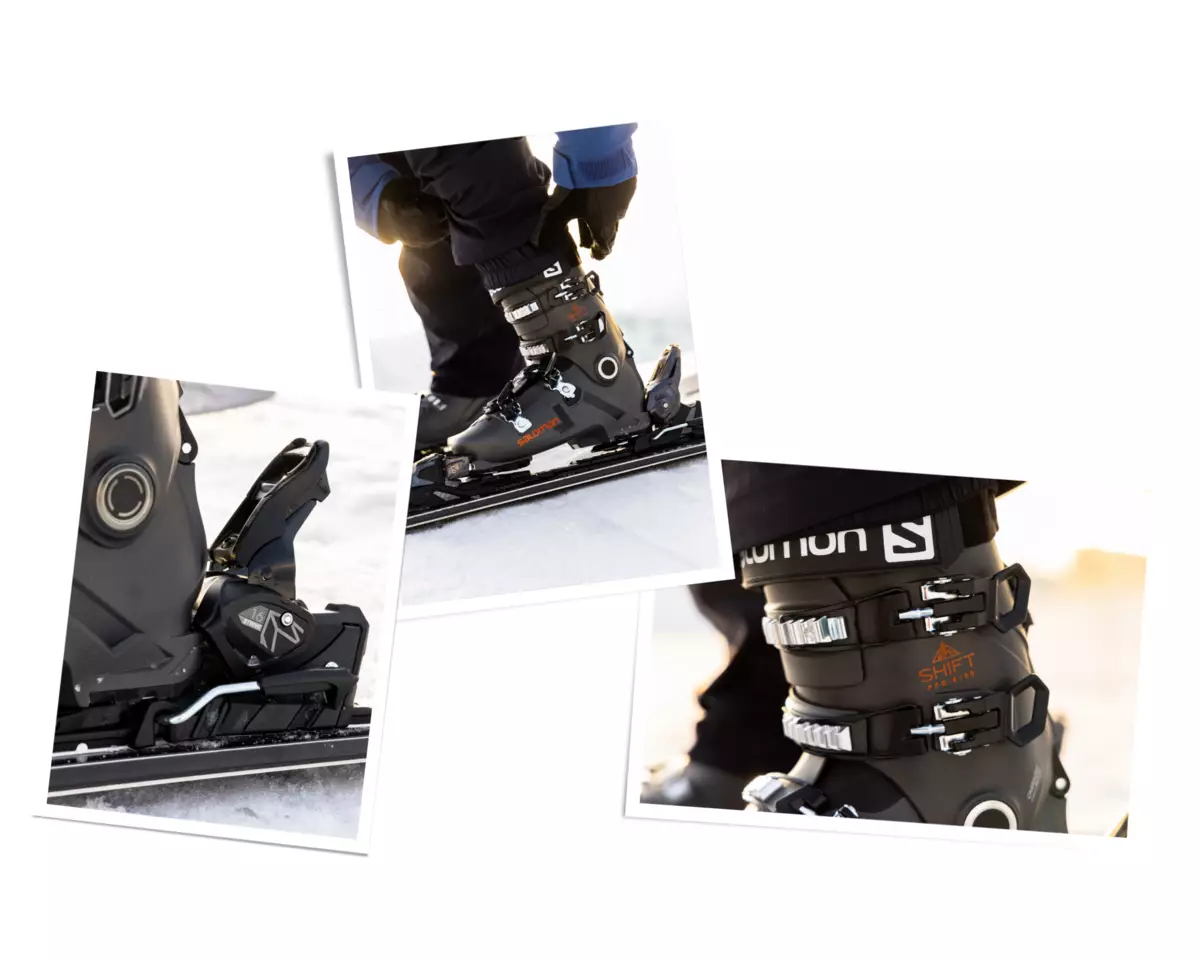
Binding : mechanism that allows to connect the ski to the boot (or the snow to the boot). In skiing, the binding plays a safety role, as its adjustment allows for release at the right moment. In snowboarding, binding adjustment primarily allows adapting the configuration to the rider's body shape and level.
Flex : index of stiffness of the ski boot . The higher it is, the stiffer and more reactive the boot. Conversely, a low flex offers more tolerance and is better suited for beginners. A flex of 60 to 80 is considered designed for intermediate skiers, while 90-110 is for athletic skiers. Beyond that, products are for competitors with stiffness from 120 to 150.
Core : base of the ski, made of wood, metal, or plastic, which gives it its stiffness and solidity.
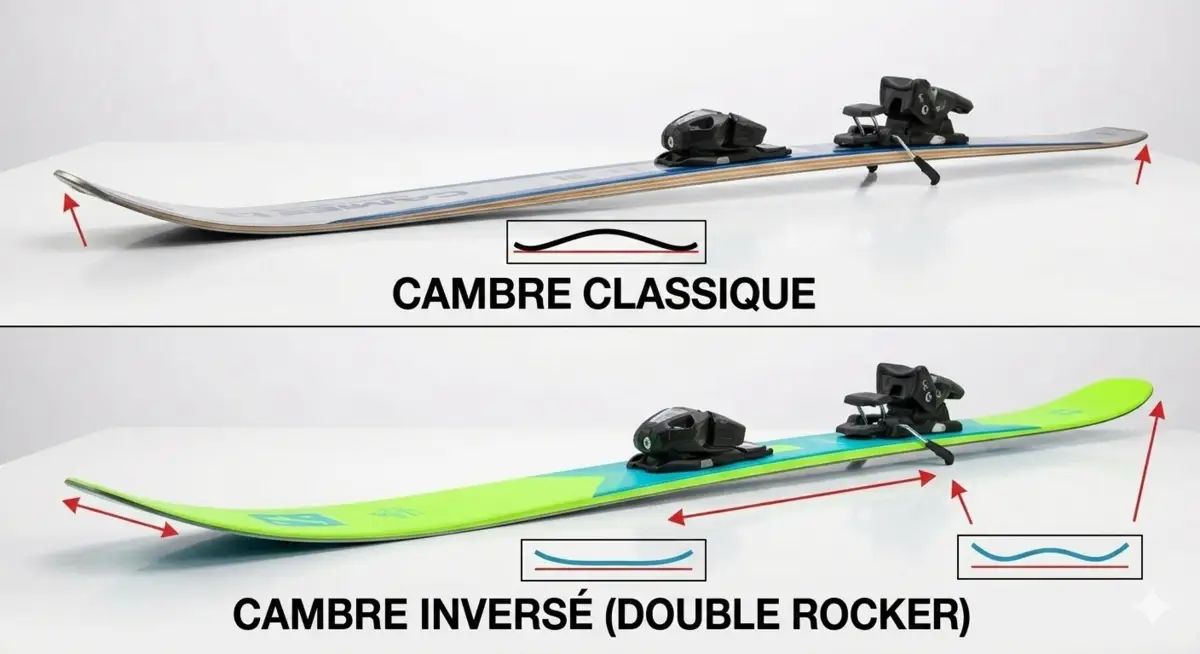
Rocker : raising of the tip (and sometimes the tail) of the ski. On a ski called "tip rocker" for example, the front third of the ski is raised, which gives it more maneuverability and better performance in powder snow, but also reduces grip and precision.
Thermoforming : each foot being different, thermoformed liners allow to adapt to the shape of your feet. By heating the material of the liner, your foot leaves its imprint, both at the arch and at the malleoli, an often sensitive area. You thus gain in comfort, but also in efficiency.
Base : part underneath the ski, which is in contact with the snow and thus allows the ski to glide. Generally made of polyethylene, it is slightly grooved in the longest direction to allow melted snow to evacuate more quickly and thus increase the skier's speed.
Tip : front part of the ski, slightly raised, which helps to break the snow. We speak of "twin tip" skis when the tail of the ski is also raised, allowing for backward movement in practices like freestyle.
Tail (or tail) : rear part of the ski, slightly curved upwards (sometimes referred to as a "rear tip").
Twin tip : also referred to as "twin shape" or "double tip ski", which refers to a ski or board of symmetrical design, which allows for identical movement forwards or backwards.
Glossary of gliding techniques
Carver/Carving : anchoring the edges of the ski or snow in the snow, by pressing hard on the downhill ski. The notion of " carved turns " is also used to talk about carving, in contrast to skidded turns. To carve means to cut a curve by taking an angle. Carving is a gliding style that consists of making large curves on groomed slopes, in a carved turn, trying to lean as much as possible into the turns. Carving also refers to skis designed for this practice.
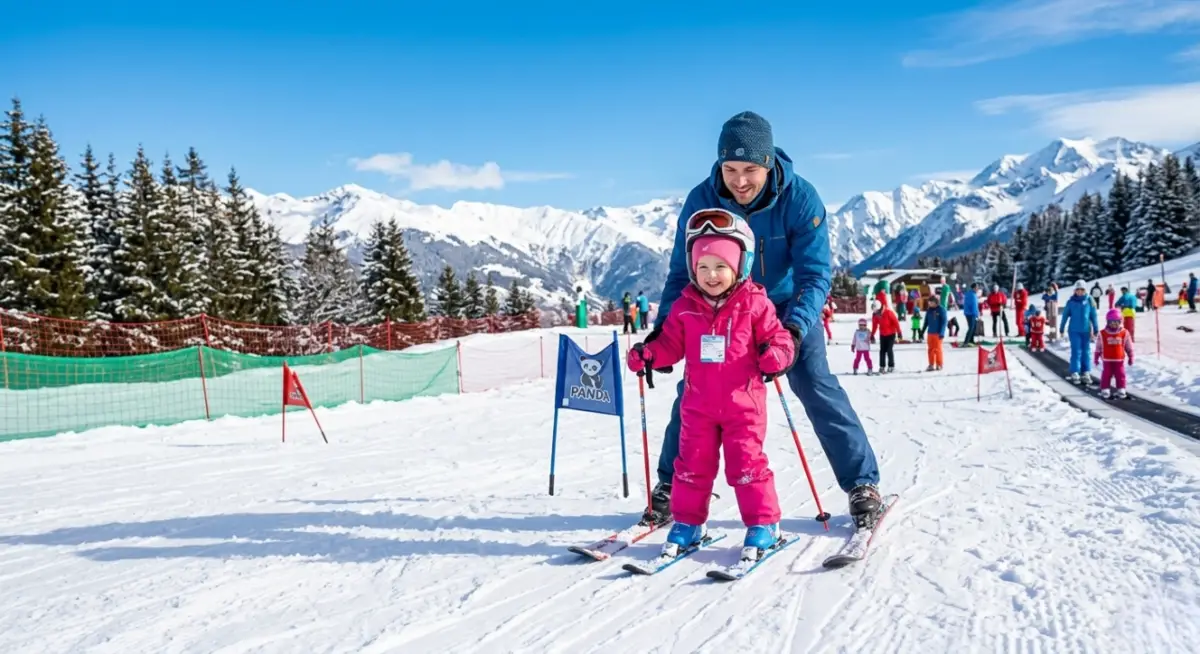
Snowplow : braking and turning technique for beginners, which consists of forming a "V" with the skis, by bringing the tips together and spreading the tails apart.
Carved Turn : A carved turn requires good technique and precise footwork. Parabolic skis facilitate the execution of this delicate turn, performed from start to finish on the edge, for a powerful and fast curve. The harder the snow and the steeper the slope, the more difficult the carved turn becomes.
Skidded Turn : This is a gliding turn, but at very low speed and with a very high degree of friction. It is the turn used by beginners to turn.
Gliding Turn : This is when the ski does not cut the snow, when it skids and pivots a little on itself. As a result, friction is greater, acceleration much lower. From a certain level, one can find in the same curve a carved part and a gliding part. This is moreover one of the mandatory steps towards mastering the carved turn.
Edge Catch : poor balance during a carving turn, causing the skier to lose balance. An edge catch occurs when one places weight on the uphill ski instead of the downhill ski.
Wedeln (Short Turns) : downhill technique with skis held parallel, which consists of making short, fast turns, staying facing the slope and without turning the shoulders.
Schuss : downhill technique that consists of going straight ahead, gaining maximum speed.
Switch (or fakie) : act of gliding backward in skiing or with the back foot forward in snowboarding (board in the opposite direction to the usual direction).
Ski-specific terms
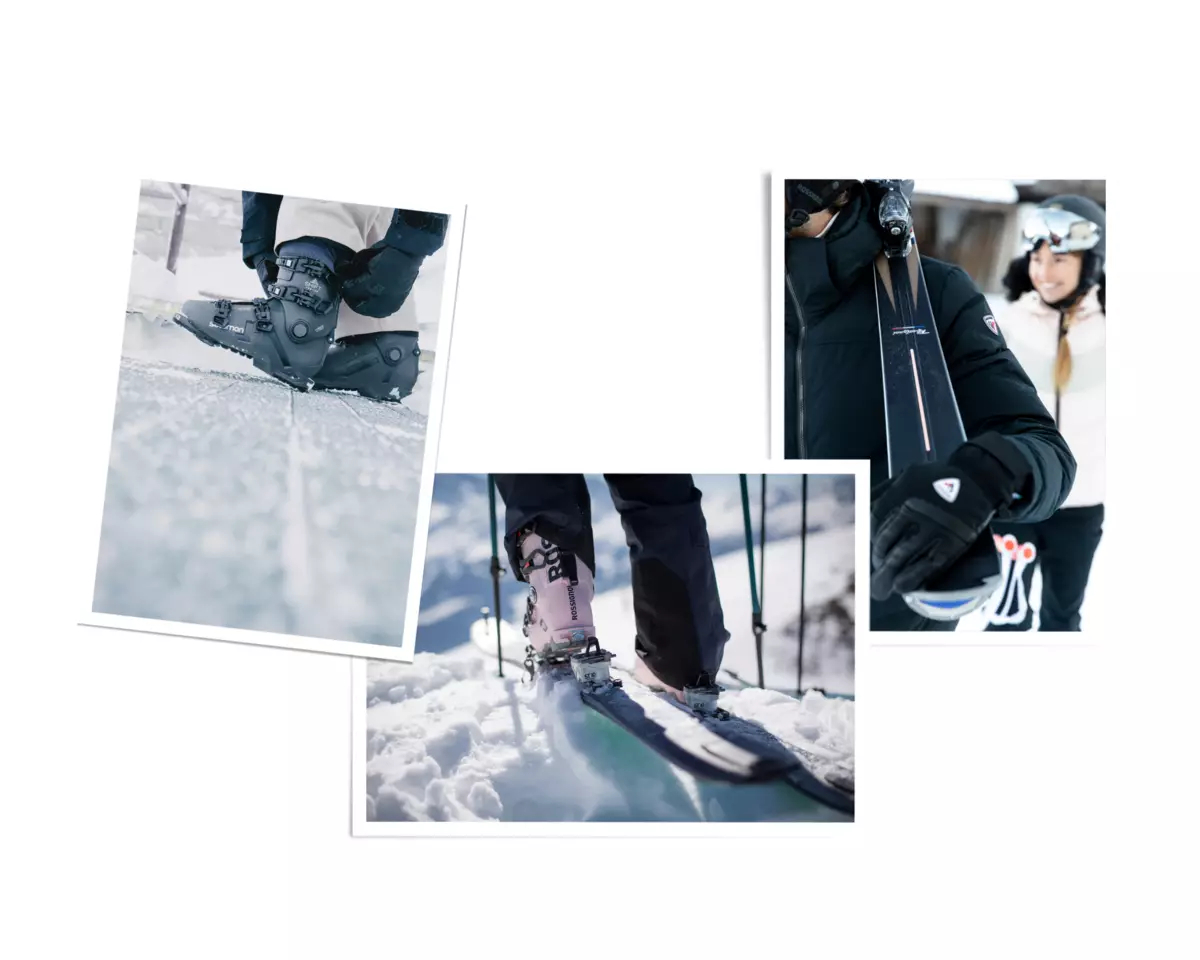
Grip : Ability of the ski to maintain the carved turn as constraints increase (snow hardness, slope steepness, increasing speed).
All Mountain : An all-mountain ski is referred to as such when it is versatile. For skiing on-piste and off-piste in all conditions. The waist will be wider than a piste ski. These "all-terrain" skis are suitable for almost all levels. They offer very good flotation and are flexible, which earns them their reputation as high-performance skis on all terrains and all types of snow.
Flex : Flex refers to all the flex ratings of a ski. Flex determines the character of the ski, its dynamism, its responsiveness. For women, who have a lower weight and do not adopt the same posture as men on skis, there are Lady flexes, adapted to these morphological differences.
Sidecut : This is where the revolution comes from! The sidecut is defined by the width of the ski at three essential points: tip, waist, tail. In short… the deeper a sidecut, the greater the difference between the tip-tail widths, compared to the waist, and the more parabolic the ski.
Waist : The narrowest part of the ski, located under the boot. The waist width allows distinguishing several types of skis. A good waist width allows for a stable ski in all snow conditions and good flotation in powder.
Turning radius : This is the theoretical measure of the distance the ski would travel to complete a turn if placed on its edge. The turn radius therefore depends on the sidecut (width at the tip-waist-tail). The deeper the sidecut, the smaller the turn radius, and vice versa.
Rebound : Ability of the ski to quickly exit a carved turn to restart with more energy and speed into the next turn.
Shape : This is the general shape of the ski; the choice of its sidecut and size determines it.
Snowboard-specific terms
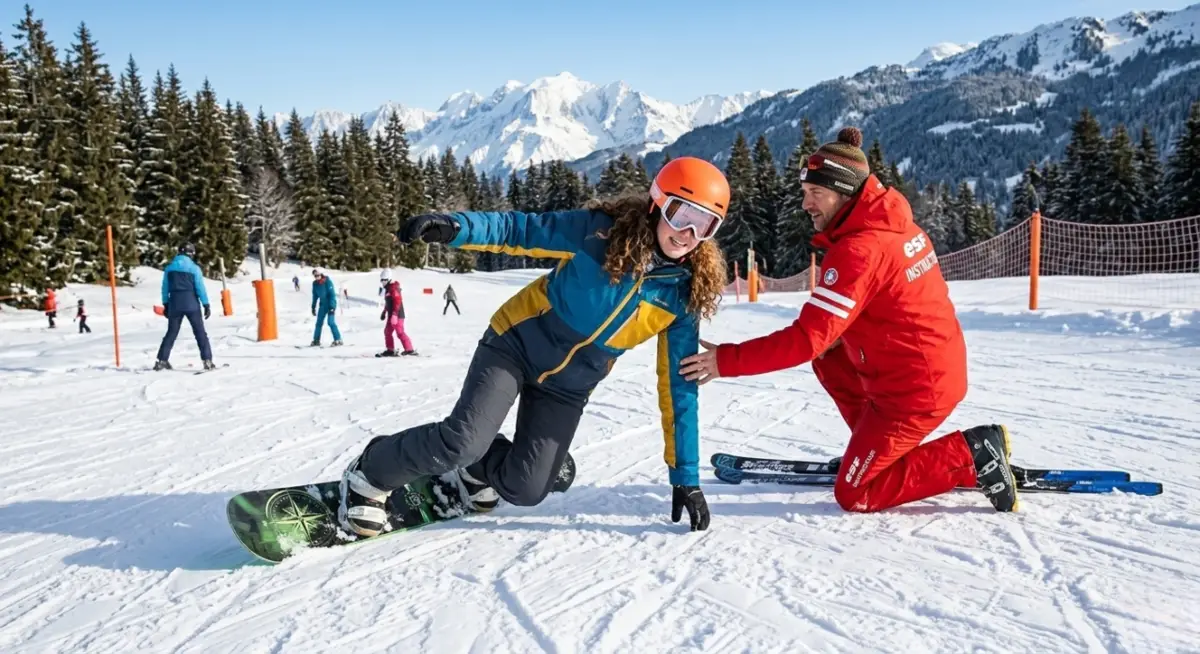
All Mountain : All mountain or all around is primarily about versatility. It refers to a board capable of handling all terrains, without a hitch.
Backside : position back to the slope, with the torso facing up the slope.
Boardercross : Like skiercross, boardercross originates from motocross. It is a marked obstacle course where four snowboarders start side-by-side. The first to arrive wins.
Boot : snowboard boot
Falling Leaf : technique oflearning snowboarding, which consists of descending the slope by making successive traverses from right to left on a single edge (staying frontside or backside), without engaging in a complete turn.
Flex : This is the flexibility of the board at the three remarkable points: nose, waist, tail. Flex defines the liveliness and, consequently, the reactions of the snowboard. The combinations of flexibility ratings are as wide as the ranges and programs defined by manufacturers. Example: the stiffer the tail, the livelier and more powerful the board is at the end of a turn.
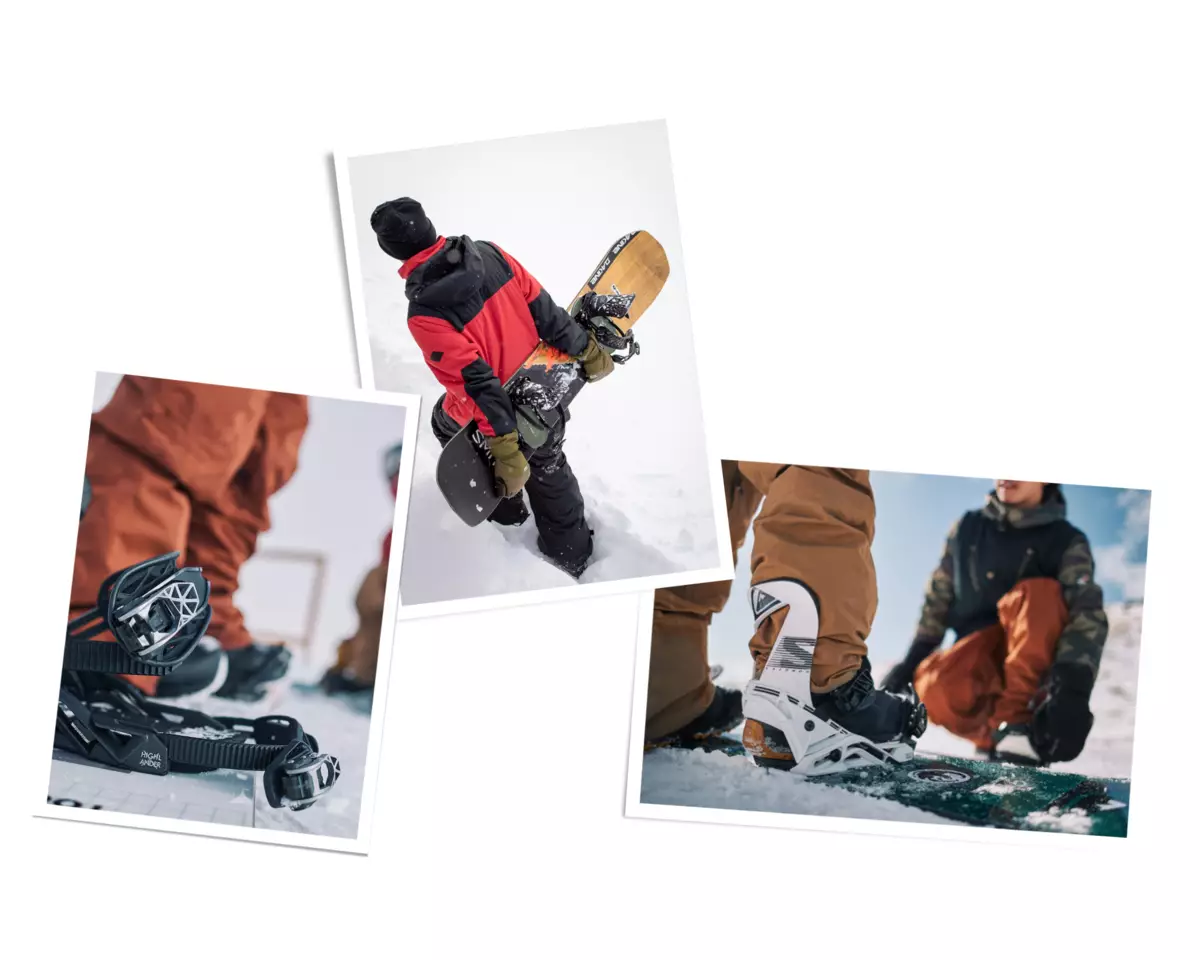
Freecarve : Refers to a board designed for groomed slopes and hard snow but with versatile behavior, not an extreme slalom board for example. It's versatility on the piste.
Frontside : position facing the slope, with the torso oriented down the slope.
Goofy : snowboarder's position with the right foot forward on the board.
Regular : snowboarder's position with the left foot forward on the board.
Stance : distance between the front foot and the back foot.
Torsion : If a board should be more or less flexible in flexion, it must be rigid in torsion, which is delicate to achieve over such a width. Manufacturers use different materials capable of these mechanical performances, in order to find the right compromise according to the board's program.

FAQ
Frequently asked questions
-
Why is it useful to know ski vocabulary?
Understanding the main ski terms helps you better follow instructions, choose your equipment, and progress confidently on the slopes.
-
What is the difference between alpine skiing and snowboarding?
Alpine skiing is practiced with two independent skis, while snowboarding uses a single board fixed to both feet.
-
What are the most important ski terms?
Essential terms include the snowplow, carving, chairlift, green slope, edges, and bindings.