How to brake on skis: techniques for skiing with pleasure and safety
A fundamental part of skiing, braking can be done in different ways. First there is the snowplow position, which is the technique for beginners, but also skidding, turning, and the "stairs" technique for more experienced skiers. If you are a beginner, the best way to learn to brake is to take group or individual lessons to progress faster. Discover all of Sport 2000's tips for learning to brake on the slopes and enjoying your mountain vacation.
In summary
Knowing how to brake on skis is essential for skiing safely and gaining confidence from the very first descents. Mastering the snowplow, controlling your speed, and adopting the right reflexes allow you to progress calmly on the slopes. Thanks to Sport 2000's advice, discover braking techniques adapted for both beginners and more experienced skiers. Read the rest of the article to learn how to brake effectively in all circumstances.
Mastering braking in skiing, why is it essential?
If you are a beginner skier, you should know that one of the basics of the practice is to know how to stop, or at least slow down. Whether it's alpine skiing on the slopes, cross-country skating, or freeride, braking is synonymous with mastering your skis. It allows you to move safely, both for yourself and for other skiers.
Warning: knowing how to stop should not prevent you from respecting the safety rules on the slopes. Remember in particular that the skier downhill has priority and that you should not stop in the middle of a slope or a turn.
How to brake on skis with the snowplow technique?
The snowplow technique is the basis for braking in skiing. If you are new to skiing, the snowplow is the simplest way to stop. But even when you have reached a good level, you will find this technique useful, especially for braking in a narrow space, or when you don't have enough space or speed to initiate a skid.
But concretely, how to brake on skis with the snowplow technique and what position should you adopt?
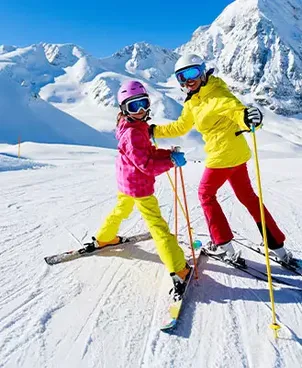
You must first flex your legs by pressing your weight forward (by pressing your shins against the tongue of your ski boots). Keep your back straight. Bring the tips of your skis together, and spread your heels simultaneously, until you form a triangle with your skis. If you want to increase braking, spread your heels further apart.
This technique is perfect for stopping when skiing at low speed. However, if you are picking up speed, it is better to use skidding, which allows you to brake faster.
Be careful not to cross your skis. Indeed, you risk falling.
How to brake on skis by skidding?
Knowing how to brake on skis by skidding distinguishes beginner and experienced skiers.
To perform a skid, keep your skis parallel by turning them towards the slope. Place your torso facing the slope, flex your legs, while also positioning your skis towards the slope, perpendicular to it. Put all your weight on the uphill ski (the side opposite the descent), using your knees.
The more your legs are flexed at a right angle, the clearer and more precise your skid will be.
When you turn your skis perpendicular to the slope, you must perform this movement quickly and turn both skis at the same time, so that they are in a perfectly parallel position, otherwise you risk falling.
This practice will be much more effective than the snowplow, but remember to anticipate a minimum: it takes a few meters to stop, so check that the slope is clear (without other skiers in front of you who might obstruct your skid). Also remember to check the condition of the snow you are on: you skid better in abundant snow or on a groomed slope than on ice. In the latter case, do not panic (and anticipate if possible): initiate a gentle skid, let yourself slide on the ice, legs flexed, until you find a normal snow area to be able to stop completely.
How to brake on skis by turning?
This is not a technique to stop dead, but to brake gradually. So it's better to know how to master it when you feel you are gaining too much speed.
To turn, shift your body weight onto the outside ski (downhill side) in the direction you want to turn, then, with your legs bent, plant your pole (to the right to turn right, to the left to turn left), and push on your pole while going around it.
How to brake on skis "in stairs"?
If you're looking for another way to stop on skis, know that braking "in stairs" is not a method to stop quickly, but it allows you to slow down and stop gradually.
When you change direction by turning, instead of continuing downhill, move back up towards the top of the slope, with your skis perpendicular to it, lifting one ski after the other uphill, as if you wanted to climb the slope on stairs.
Make sure that other skiers are not descending the slope at that spot (to avoid any collision) and that it is wide enough.
Are you ready to practice now? Book your equipment online with Sport 2000 (skis, boots, and poles) and hit the slopes! Do not hesitate to take lessons to learn these braking techniques with an experienced guide, who will be able to give you personalized advice.

FAQ
Frequently asked questions
-
What is the best technique for braking on skis?
The snowplow remains the simplest and most effective technique for beginners.
-
How to slow down without falling?
Maintain a balanced position, spread your heels, and gradually control your speed.
-
When do you learn to brake on skis?
Braking is one of the first techniques taught during initial ski lessons.