How to learn to snowboard?
How to learn to snowboard ? Which foot should be placed at the front of the board? What is the dead leaf technique for? What is the difference between backside and frontside turns? Why start on easy slopes and learn to snowboard by taking lessons? Which snowboard to choose for beginners? These are a multitude of questions you are surely asking yourself if you are considering thelearning to snowboard for the first time or if you want to progress. In addition to Sport 2000's tips for starting skiing, here is everything you need to know for your first steps in snowboarding!
In summary
Snowboarding attracts many beginners, but the first descents can be unsettling without the right basics. Choosing suitable equipment, learning to keep your balance, and mastering the first turns are key steps to progress quickly. With Sport 2000's advice, discover how to learn snowboarding safely and gain confidence. Continue reading to succeed in your beginnings on the slopes.
Snowboarding, which foot forward?
As with skateboarding, first determine if you are Goofy (right foot forward on your snowboard) or Regular (left foot forward). If you don't know which foot to put forward, ask someone to push you forward by surprise. The first step you take will indicate which leg to position in front of your snowboard.
To learn how to snowboardcorrectly, get into the habit of looking ahead when you ride. In practice: fix a point in front of you (not your legs or feet...), while resting your body weight on your front leg, shoulders parallel to the snowboard. The secret is to find the foot and body position that offers good balance, while controlling your speed.
Learning the falling leaf technique
This technique consists of letting yourself slide by using your heels and body weight on the side you are sliding. Go frontside (facing the slope for more visibility) or backside if it's a very steep slope and/or icy snow.
Knowing how to negotiate turns
The biggest difficulty when learning to snowboard? Knowing how to turn. There are 2 types of turns in snowboarding: frontside turn (you turn your back to the mountain while pressing on your toes) and the backside turn (you are facing away from the slope, supported on your heels).
Once you are used to it, you can try carved turns (you turn on the edge) or skidded turns (with bent legs, start with a backside turn, pivot the board, then finish with a frontside turn).
Don't get discouraged
The classic mistake: you tend not to let the snowboard slide flat gradually when turning and you brake too abruptly with the edges.
Learning to snowboard also means not getting discouraged at the beginning! There's a 2 or 3 day hurdle to overcome, some inevitable falls in the snow, but after that, you'll start to enjoy yourself and make progress. Don't forget that mistakes also build experience, and knowing how to identify them will help you move to the next level.
Start with easy slopes
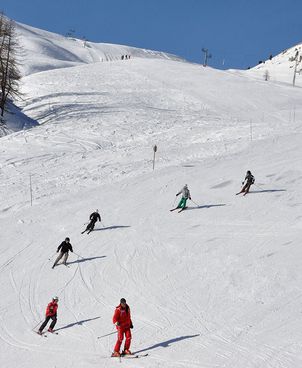
There are many ski resorts offering beginner slopes, with a gentle slope where you will feel safer. If you are new to snowboarding, this will be more than enough time to master the basics: you will pay a cheaper pass and won't be bothered by (and won't bother) faster skiers or snowboarders. For example, resorts like Morillon have secure areas of their ski resorts reserved for new skiers and riders. They are often found near the resort (at the snow front), but sometimes also higher up in altitude.
In any case, to learn to snowboard, prefer green and blue slopes. Once you are more comfortable, you can consider more difficult slopes. Also try freeride (off-piste), to discover the incomparable sensation of floating on powder snow that snowboarding offers!
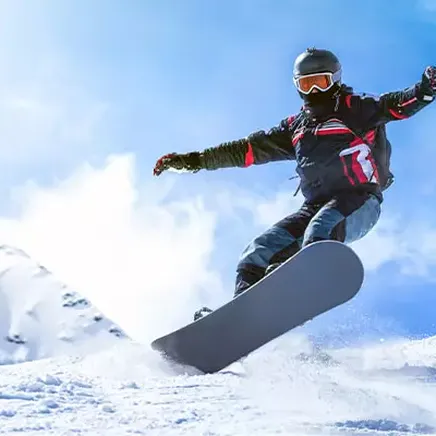
When you have a bit more experience and know how to turn, slide, and brake, it will also be time to consider learning the basic freestyle tricks (switch, ollie, nollie, grab, 180°, 360°, etc.) by going gradually! There are even snowparks with zones and modules for beginner riders, like in the winter sports resort of Chamrousse or the ski resort of Megève.
Learn to snowboard by taking lessons
It's not impossible to learn to snowboard by yourself or by following the advice of experienced snowboarders. Nevertheless, we strongly advise you to take a few lessons with an instructor (even if you are already a skier), so you don't get frustrated and can master the basics of this sport more quickly.
For example, take 2-hour lessons in the morning, then practice independently in the afternoon. You can generally choose between individual lessons where you are alone with an instructor (ideal for the first few days of learning) or group lessons with other beginners (less expensive).
And if you feel too tired, take a break. For children and adults alike, it's useless to try to string together hours of riding: it's better to go step by step, to continue to have fun and ride safely.
Choosing the right equipment for beginners
The equipment (board, snow boots, clothing, etc.) plays a crucial role when learning to snowboard.
Choose a sufficiently flexible board, as this will reduce your errors (especially edge faults). Opt for a twin-tip board (with a double nose and tail), with a setback of 0, to have bindings centered on your board.
If you start learning to snowboard on a twin-tip and quickly feel comfortable, you can consider switching to a twin shape board (bindings positioned further back). This is an "all-mountain" (piste and powder) and very maneuverable model.
Whatever equipment you want to choose, it is possible to rent it online with Sport 2000 during your mountain vacation. Besides ski rental, our stores also offer equipment for many winter sports, including models of boards for children and adults, for beginner or more experienced levels. They can be rented as a pack, i.e., with the boots (snowboard boots).
And by choosing rental, you'll benefit from in-store advice to find the ideal equipment for you!

FAQ
Frequently asked questions
-
Is it difficult to learn snowboarding?
The first few hours require some practice, but progress is often quick.
-
Should I take snowboard lessons?
A few lessons help acquire the right techniques from the start and avoid bad habits.
-
What equipment should I choose to start snowboarding?
A board adapted to your level, comfortable boots, and a helmet are essential for starting.