Sport 2000's expertise for ski maintenance
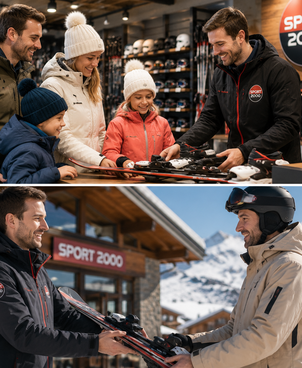
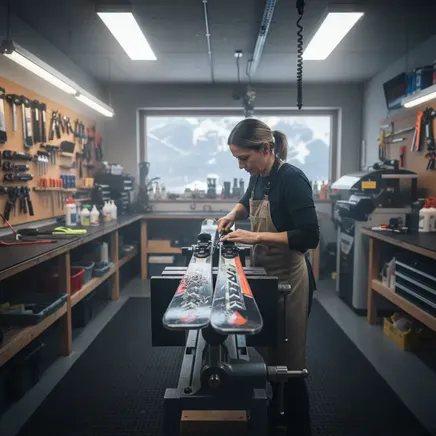
Maintaining ski equipment isn't improvised: it requires expertise, meticulousness, and suitable equipment. The Sport 2000 ski workshop teams have all the skills and tools necessary to achieve the best results. By renting your skis with Sport 2000, you can therefore be reassured about the quality of glide and ski serenely with the whole family. We tell you more about the regular maintenance carried out by Sport 2000 technicians: discover the essential steps and the before/after maintenance differences that demonstrate the expertise of our in-store teams.
In summary
Well-maintained skis are essential for enjoying a smooth glide, preserving the performance of your ski equipment and skiing safely. From ski waxing to edge sharpening, each maintenance step helps extend the life of your equipment. Thanks to the expertise of Sport 2000, benefit from professional services and expert advice to maintain your skis in the best conditions. Discover in the rest of the article why regular maintenance makes all the difference on the slopes.
Professional ski maintenance: why is it essential?
Meticulous ski maintenance is essential for safety, performance, and longevity reasons. With repeated use, equipment inevitably gets damaged, which can hinder gliding, make turning more complicated, increase the risk of falling, reduce pleasure on the slopes, etc.
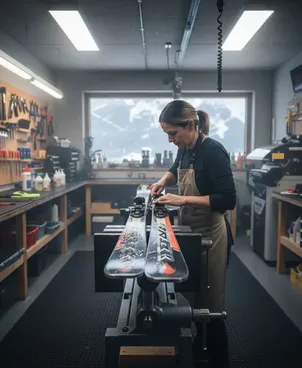
Sport 2000 ski technicians therefore regularly check rental equipment and perform timely maintenance: base repairs, waxing, and sharpening. Their expertise and professional equipment allow for quality maintenance. For you and your family, this guarantees skiing in good conditions with reliable equipment.
Ski characteristics before and after maintenance by Sport 2000
A well-maintained ski has a smooth base, without holes or rough spots, and sharpened edges. When you pick up your rental skis at a Sport 2000 store, you'll quickly notice the care taken with the equipment. But to fully understand what happens when a ski is maintained and to recognize equipment that has passed through the expert hands of Sport 2000, we'll explain the differences before/after maintenance.
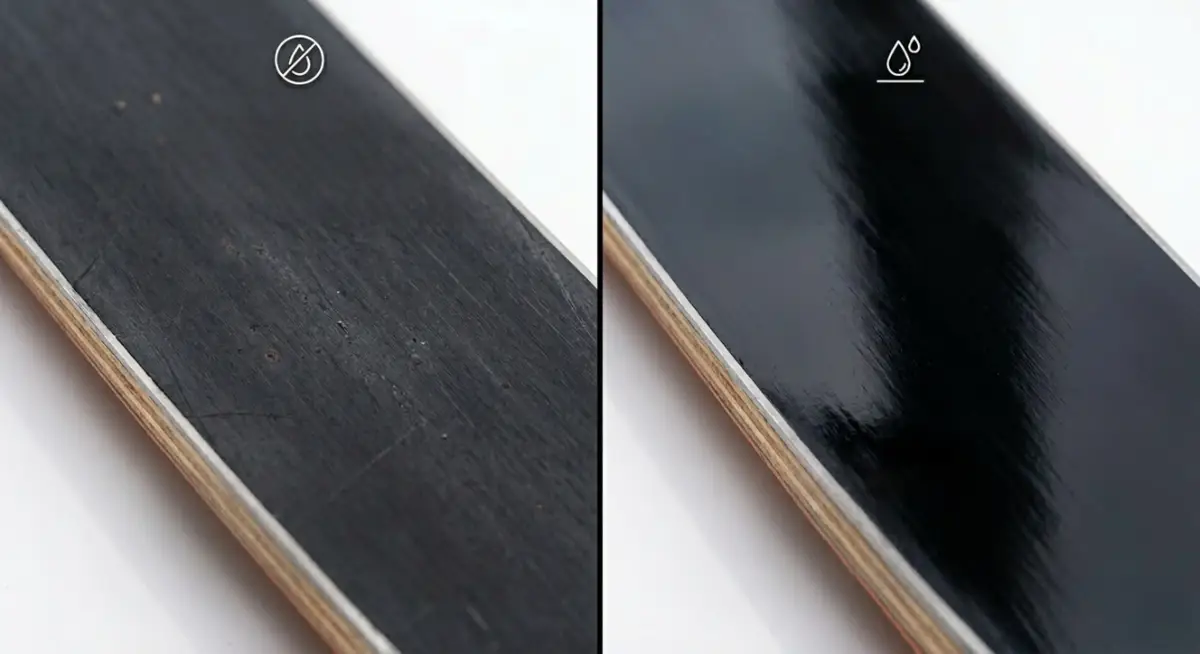
“Dry” ski VS waxed ski
Waxing involves applying a layer of wax to the ski base. This protects it and improves gliding. Here's a more precise way to recognize a well-waxed ski and why it's important.
Visual and tactile appearance
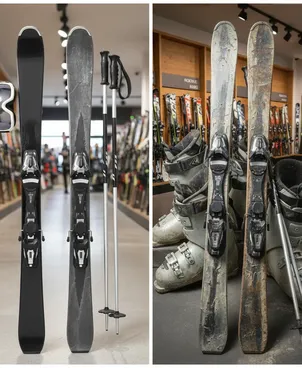
A “dry” ski is immediately recognizable: the base appears dull, it's whitish in places, sometimes greyish. It lacks depth and shine. To the touch, it's rough, almost crunchy under the fingers. This means the base is dehydrated and the material has lost its ability to glide properly.
Conversely, a waxed ski has a black, dense, and homogeneous base. To the touch, the surface is smooth and soft. To achieve this result, the ski technician ensures the wax penetrates the base well, then precisely scrapes and brushes to provide an optimal finish.
Performance and safety of a waxed ski
On snow, a dry ski grips, brakes, and requires more effort. The glide is irregular, especially on cold or wet snow. Result: more fatigue, less pleasure, and a loss of control in certain phases (flats, re-launches, turn exits).
A waxed ski, on the other hand, offers a fluid and regular glide. It maintains its speed, facilitates transitions, and makes skiing more manageable. Wax also protects the base against oxidation and premature wear. It's both a performance gain and a concrete way to extend the equipment's lifespan.
After workshop sharpening, the difference is clear: the edge is straight, regular, and perfectly defined. The angles are precisely worked according to the skier's level and practice. To the touch, the edge is sharp, lively, ready to grip the snow.
Performance and safety of a sharpened ski
A ski with damaged edges has poor grip, especially on hard or icy snow. This makes turns more approximate and reduces the skier's stability. Beyond the impact on performance, it also calls safety into question.
On the contrary, when they are well-maintained and sharpened, the edges grip correctly on all types of snow. The technician uses a special sharpening machine and guarantees a suitable and homogeneous angle along the entire length of the ski. Results: curves are more precise, the skier better controls their trajectory, and the glide is clean and reassuring.
Damaged ski VS repaired ski
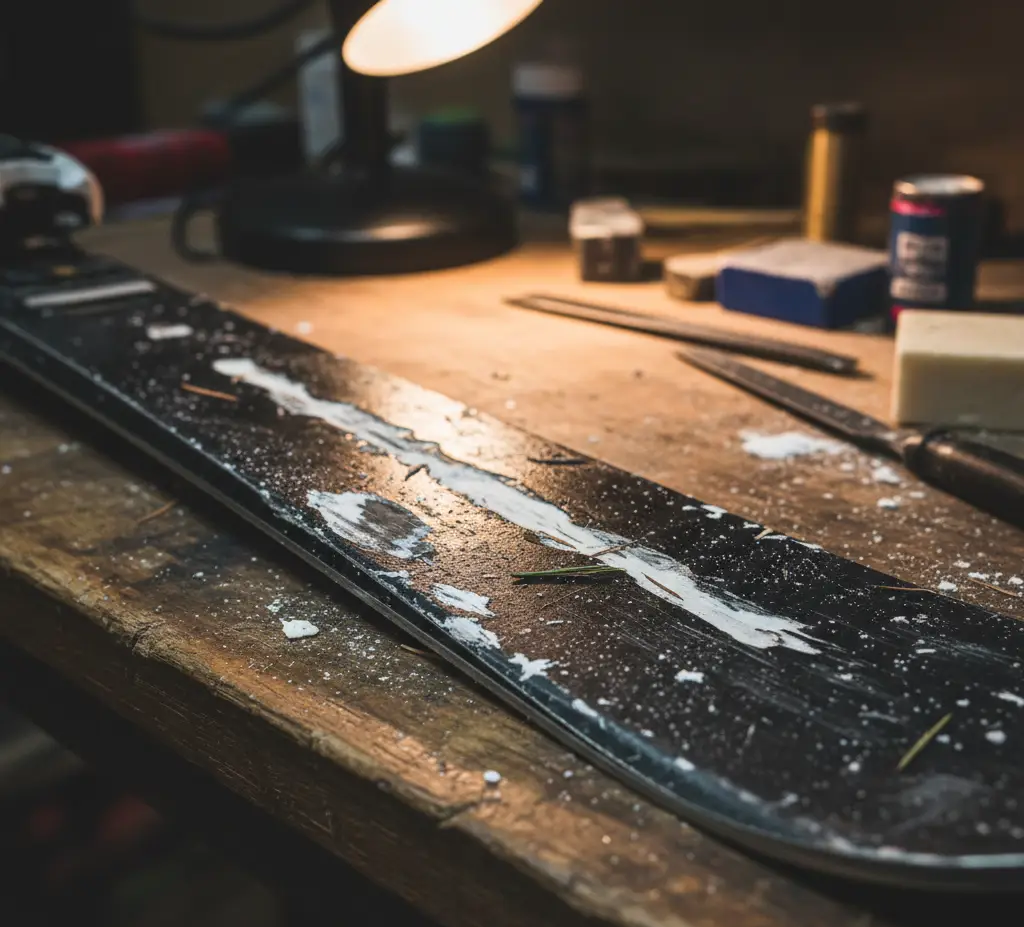
Waxing and sharpening are operations to be performed regularly throughout the season. In addition, more extensive repairs are sometimes necessary if the ski is damaged (filling a hole, filling a scratch, overmolding, etc.). Here are the major differences between a damaged ski and a ski that has been repaired by a Sport 2000 professional.
Visual and tactile appearance
A damaged ski can show various defects: deep scratches, impacts, and even holes in the base. These defects are visible to the naked eye and perceptible to the touch.
After workshop repair, the damaged areas are filled, leveled, then re-worked with a stone. The base then regains a flat and uniform surface. Visually, the ski appears refurbished.
Performance and safety of a ski in perfect condition
A damaged ski no longer glides evenly. Deep scratches create braking points and disrupt the trajectory. In the long term, moisture infiltration can also deteriorate the ski's core.
A repaired ski regains a regular and predictable glide. The base structure is restored, which improves stability and precision in turns. Repair also protects the ski against more significant damage.
Sport 2000 expertise: guaranteeing your pleasure and safety on the slopes

As you will have understood, ski maintenance is not optional. It is essential for the equipment to glide smoothly, to better control trajectories, and to be more stable. In other words, it is a prerequisite for skiing without frustration and without danger. For this, you can trust Sport 2000 technicians: experienced and competent, they know exactly when and how to maintain ski equipment. By renting from a Sport 2000 store, you thus benefit from true serenity on the slopes, for you and your children.

FAQ
-
Why have your skis maintained at Sport 2000?
Having your skis maintained at Sport 2000 allows you to benefit from a professional service including ski waxing, edge sharpening, base repair, and general equipment inspection. Maintenance performed by experts improves the quality of glide, safety, and longevity of your ski equipment.
-
What ski maintenance services does Sport 2000 offer?
Theski maintenance services offered by Sport 2000 include waxing, edge sharpening, base repair, and complete ski preparation before or after the season. These services help restore equipment to high performance, adapted to all snow conditions, and ready to offer optimal glide.
-
How often should you maintain your skis?
It is recommended to perform ski maintenance every 5 to 10 days of skiing or as soon as the base becomes dry and the edges lose effectiveness. Regular maintenance at Sport 2000 helps preserve the performance of your skis, improve your comfort on the slopes, and extend the life of your equipment.