Sustainable skiing: simple gestures to reduce your environmental impact in resorts
Going on winter holidays in the mountains means treating yourself to a break in the heart of nature and sharing precious family moments. But these landscapes that amaze us are also fragile. They deserve to be preserved and to remain intact, to continue to enjoy them in the coming seasons and to allow future generations to experience the joys of snowy slopes. So, if you are a true mountain lover and want to limit your ecological footprint, know that several simple gestures can considerably change things. And this, without giving up pleasure and without feeling guilty!
In summary
Ski holidays can have an impact on the environment, but a few simple gestures can easily reduce it. Adopting sustainable skiing involves responsible choices: prioritizing ski rental, maintaining your ski equipment, limiting your waste and respecting natural spaces in resorts. Sport 2000 shares its advice for enjoying the slopes while preserving the mountains. Discover in the rest of the article the good practices to adopt to reduce your environmental impact and practice skiing more responsibly.
Choose a certified resort close to you
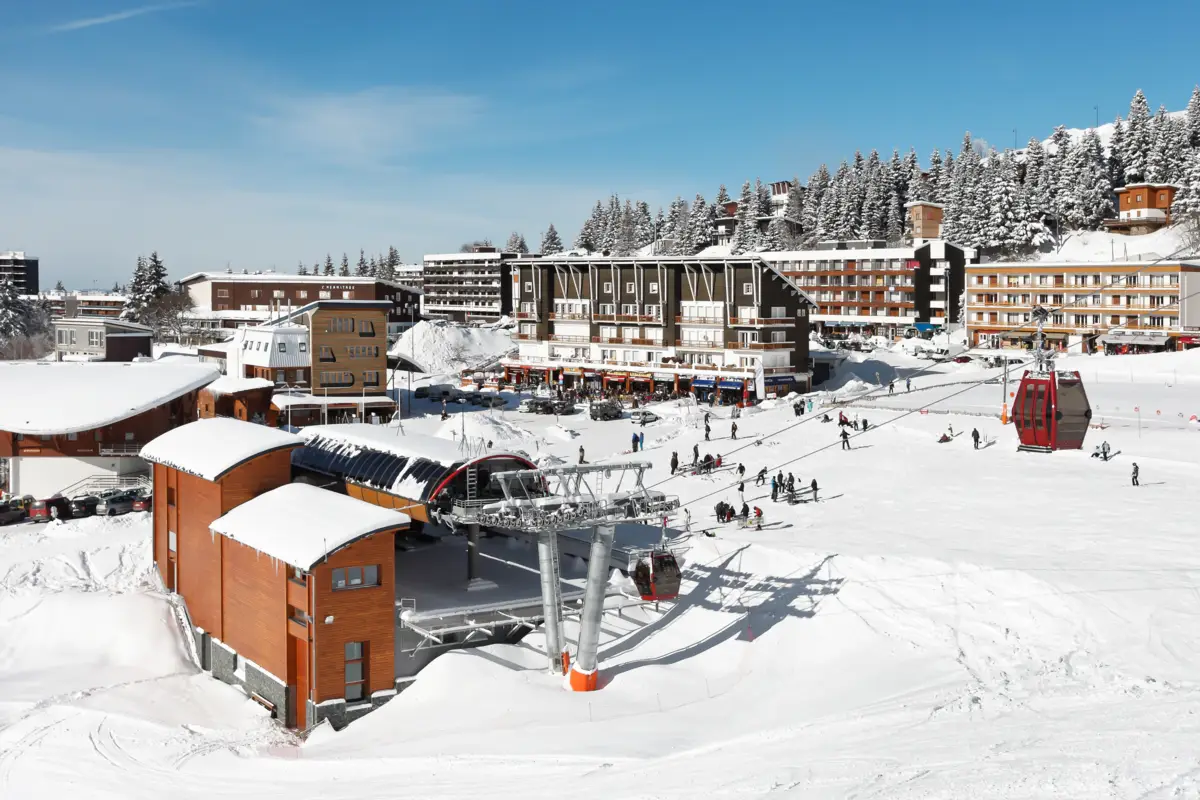
The ecological footprint of your vacation is determined long before you arrive at the resort, when you choose your destination. But what criteria should you use to choose the ideal resort ? Here are some simple tips to apply:
prefer a resort that holds an environmental label, such as Green Snowflake (more than 30 resorts will be certified in France in 2026, and the majority of them have one or more Sport 2000 stores);
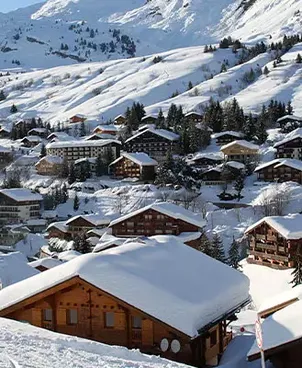
prefer a resort-village rooted in its landscape and local area, rather than a heavily concreted resort, and if possible:
turn to pedestrian resorts (practical and safer for a stay with children) and/or well-equipped with free public transport ;
look for your destination primarily among the resorts closest to you, and if you hesitate between several of them, don't hesitate to calculate the carbon emissions of each journey to make the most ecological choice.
Opt for eco-friendly accommodation
Even if it's not always easy to choose the ideal accommodation remotely, you can rely on several criteria for a more sustainable ski trip:
environmental label : Green Key, EU Ecolabel, etc., which notably rewards commitments in energy, water, and waste management;
type of heating, prioritizing renewable energies ;
appropriate accommodation size for your needs: no need to opt for an XXL chalet, complicated to heat, if you are a family of 3 or 4 people.
establishment location: sleeping near the slopes or public transport reduces potential car usage.
Prioritize public transport over cars
Once the resort is chosen and your accommodation booked, there are many other ways to reduce your ecological impact.
One of the most energy-intensive and polluting aspects for a skier is indeed the journey, and even more so when done by internal combustion car.
In certain situations, we know that doing without a car can be complex: a car is more economical when traveling in groups, not everyone lives near a train station or a bus transport service, and imposed schedules are sometimes unsuitable and difficult to adhere to, especially when traveling with children.
Nevertheless, there are always solutions to limit the ecological impact of the journey, depending on where you live and your destination: carpooling, train (many resorts are served directly by train or have bus connections from stations and airports) and bus.
Also, remember that by reserving your equipment in advance with Sport 2000 and picking it up directly at the resort, you limit unnecessary travel and you travel lighter !
Rent equipment instead of buying it

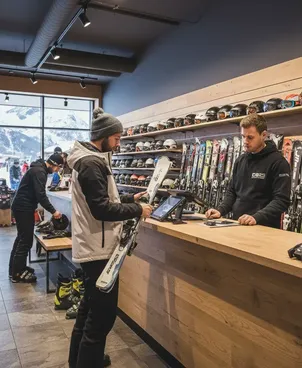
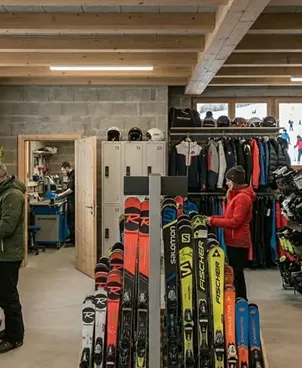
Another way to ski more sustainably, which is less thought of, is to rent ski equipment rather than buying them new. We're talking here about skis, but also boots, helmets, poles, etc. It is even sometimes possible to rent ski clothing at a Sport 2000 store : economical and practical, especially for children who change sizes every season. But why is it more ecological? Because rental allows for sharing equipment and optimizing its use, toavoid recurring purchases and to maximize the lifespan of equipment. With Sport 2000, rental is part of a sustainable approach : skis are maintained, repaired, and prepared in a workshop by professionals, to extend their longevity and optimize their use throughout the seasons.
If you want to know more, we have dedicated a full article to the environmental benefits of ski rental with Sport 2000
Consume local and seasonal products

A family stay in the mountains is an opportunity to discover a multitude of local specialties, which can appeal to both adults and children.
It's therefore combining pleasure and environmental action, since by favoring local and seasonal foods, you limit emissions due to transport, the energy required for their production and preservation, etc.
Whether at the restaurant, in markets, or in grocery stores, opt for products from the region. At the same time, this will allow you to fully immerse yourself in the “mountain atmosphere” and raise awareness for the whole family!
Adopt eco-friendly practices in your accommodation and on the slopes
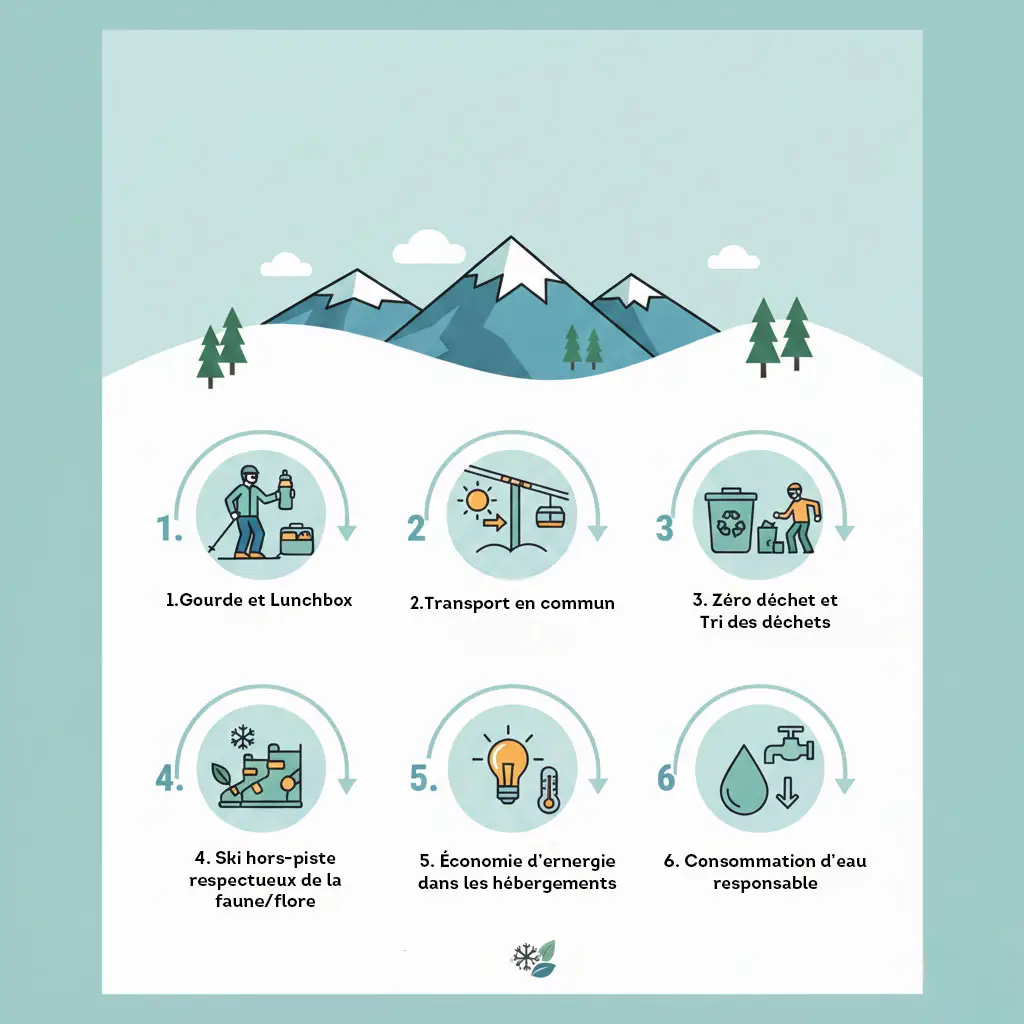
While on vacation, one might tend to relax and abandon some good habits from home, it is nevertheless essential to continue to act with small, simple gestures when on a ski vacation.
Actions to adopt in your accommodation
You probably already know the actions that can reduce your environmental impact, but here is a reminder of the measures to adopt during the holidays:
limit water consumption (e.g., short shower rather than a bath);
heat the accommodation reasonably (e.g., use the programmer if there is one, limit the temperature to 19°C in living areas);
sort your waste ;
ventilate the accommodation daily, but do not leave windows open too long to avoid heat loss;
turn off lights and electrical appliances when leaving the accommodation;
reuse towels and sheets for several days at the hotel, rather than changing them daily, etc.
Good habits to adopt on the slopes
It's not just in your holiday residence that you can act in favor of the nature around you. When you are on the ski area, adopt the following gestures:
if you are a smoker, bring a pocket ashtray ;
do not throw anything in nature, including food scraps, and do not hesitate to pick up non-hazardous waste (packaging for example);
stay on marked areas and do not enter protected areas;
limit single-use items (water bottle VS plastic bottle, tupperware VS disposable plastic box, etc.).
Skiing more sustainably: it's your turn!
As you will have understood, it is not necessary to take drastic measures to make your mountain stay more ecological. At Sport 2000, we are convinced that sustainable skiing involves a sum of small gestures that everyone can implement.
And you will see that adopting these simple gestures will eventually become a habit over the seasons!
Moreover, no need to feel guilty: if you can't tick all the boxes, do your best, and try to improve your ecological footprint a little with each new stay.

FAQ
-
How to practice skiing more sustainably?
To adopt sustainable skiing, it is advisable to prioritize ski rental, choose ski equipment that is suitable and maintain it well to extend its lifespan. Reducing waste, using public transport in resorts and respecting natural spaces are also simple gestures to limit your environmental impact.
-
Why is ski rental an ecological solution?
The ski rental contributes to a more responsible skiing practice by promoting the sharing and reuse of equipment. Rented equipment can be used by several skiers over several seasons, which limits the manufacture of new skis and reduces the ecological footprint associated with the consumption of sports equipment.
-
How does Sport 2000 encourage more responsible skiing?
Sport 2000 supports skiers in a sustainable skiing approach, notably by offering ski rental, maintained equipment and advice for adopting better practices in resorts. By choosing suitable equipment and taking care of their ski equipment, everyone can enjoy the mountains while contributing to their preservation.