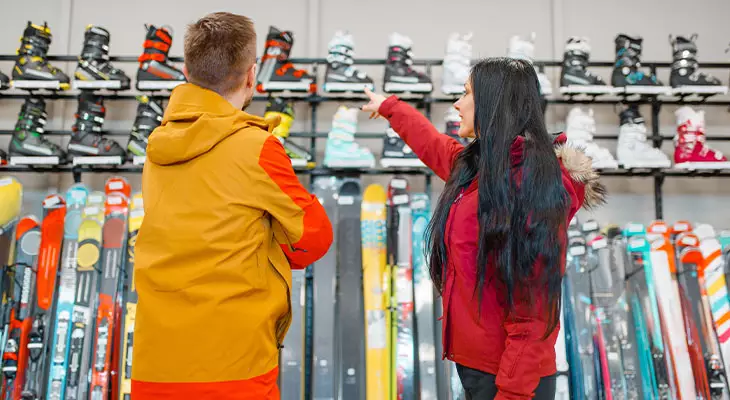
Also called all-mountain skis, these versatile skis are enjoyable to use both on groomed slopes and off-piste. They are the ideal compromise for skiers who enjoy both terrains and don’t want to invest in two separate pairs of skis.
In its guide on choosing the right ski equipment, Sport 2000 provides advice on how to choose the best all-mountain skis so you can tackle all types of terrain and snow conditions comfortably. Finding the right balance between stability, performance, and comfort is key given the wide range of options available!
When to choose all-mountain skis
Before asking which all-mountain skis to choose as a beginner or when exploring off-piste skiing, it’s important to understand what these skis offer. All-mountain skis represent the ideal compromise between alpine, freestyle, and freeride skis, as they can glide on virtually all types of snow.
Before deciding which all-mountain skis are right for you, consider how you plan to use them and your skill level. If you’re confident in alpine skiing, off-piste, and freestyle, and want just one pair, all-mountain skis are the perfect choice.
Choosing the right ski length
Alpine skiers generally prefer longer skis, while freestyle skis are slightly shorter and lighter. So how do you pick the right all-mountain ski length for mixed use? Four scenarios depend on terrain, snow type, and preferred skiing style:
- Equal on-piste and off-piste skiing: choose an intermediate to long ski length for comfort and maneuverability across all terrains.
- Mostly on-piste skiing: if off-piste is occasional, opt for an intermediate length ski.
- Mostly off-piste skiing: a longer-than-average ski provides good flotation in powder, but avoid skis that are too long for piste skiing. Ski width for powder should be larger, but to remain versatile, keep the waist under 105 mm.
- Freestyle sessions in snowparks or backcountry: choose slightly shorter, narrower skis for greater maneuverability.
Keep in mind that skill level also affects ski length. More advanced skiers can handle longer skis, which help increase speed while maintaining stability and improving turning performance.
Renting all-mountain skis: ideal for testing
If you’re unsure which model to choose, two good options are available: attend equipment testing sessions at resorts (often free) or rent your equipment from a ski shop.
Renting allows you to try different types of all-mountain skis with varying specifications in terms of waist width, camber, rocker, turn radius, etc. Whether you plan to buy your own pair later or just want to enjoy all-mountain skiing for a few days, renting is an affordable way to experiment. You can also rent boots and bindings suited to your style and needs.
Off-piste skiing: practice with caution
All-mountain skis let you enjoy groomed slopes as well as off-piste powder, but off-piste skiing, also called freeride, can be dangerous. We strongly advise taking precautions first. Train in a DVA Park before venturing into backcountry (often free with a lift pass) and consider going with a guide for your outings.
Sport 2000 shops and online stores offer safety equipment such as helmets, avalanche transceivers (DVA), probes, and shovels. These can also be rented as part of a safety pack in partner stores.
If you enjoy off-piste skiing during your winter holidays, remember that Sport 2000 also rents skis specifically designed for freeride (wider, pronounced rocker), ski touring, and freerando.