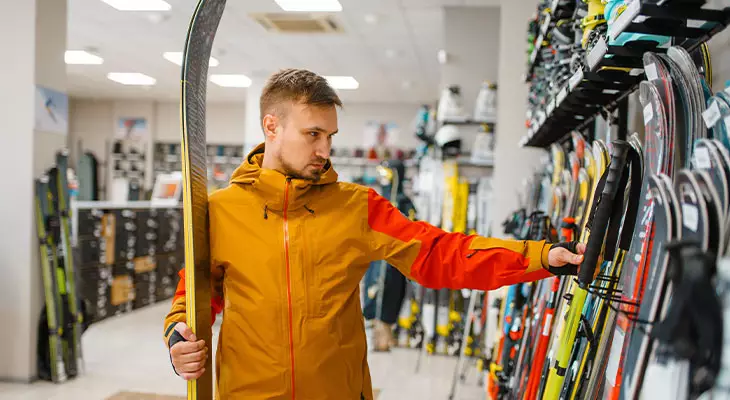
Have you already skied but mostly stick to green and blue slopes? Or do you master the basics and want to improve? In either case, you’re probably wondering how to choose your alpine skis. Sport 2000 is here to guide you in finding the right equipment to gain speed and maneuverability. Here are some expert tips to help you decide which skis to choose for beginners or intermediate skiers.
Equipment for beginners and intermediate alpine skiers
Beginners typically use softer skis that grip groomed snow well, as they are easier to handle. However, these skis offer limited options in terms of speed and maneuverability. To progress and explore new sensations, we recommend moving to stiffer skis. Regarding ski length, you have two options: shorter skis, which remain maneuverable and responsive, or longer skis, which provide stability and help build confidence at higher speeds. Your choice will depend on terrain conditions, snow type, and skiing style.
You can also check our other guides to find the perfect pair: parabolic ski length, criteria for choosing ski types, all-mountain ski sizes, and more.
Choosing accessories suited to your level
For beginners and intermediate skiers, knowing which skis to choose is essential, but not the only factor. Your ski boots and poles are also very important. If you’re progressing from beginner to intermediate, we recommend stiffer boots that better follow your movements and provide increased control.
Additionally, if you want to try off-piste skiing and enjoy powder snow, consider upgrading your poles or replacing the baskets with wider ones to prevent sinking and maintain balance.
Whether it’s skis, boots, bindings, or poles, if you’re unsure about the right gear, try online ski rental with Sport 2000. When booking, choose the Primo or Blue skis for beginners, or Red skis for intermediate skiers. You can also rent beginner or intermediate skis for children if you’re enjoying winter sports with your family.
Enter your profile information (age, weight, height, skill level, etc.) so the in-store team can prepare skis and boots tailored to you. No need to worry about ski length, width, or technical features such as tip shape, turn radius, or rocker.
When picking up your equipment at the resort, the ski technicians will also adjust your bindings so you can hit the slopes safely.
Expand your experience with new disciplines
If you’re comfortable on piste and master the basics, you may want to explore other winter sports like snowboarding, ski racing, ski touring, freestyle skiing, or freeride skiing. Which skis should an intermediate skier choose for these disciplines?
You cannot use your regular skis, as this could damage them and put you at risk. To try a new discipline, you’ll need skis designed specifically for it. No worries—Sport 2000 stores provide the right equipment, both in-store and online, including accessories and protective gear, especially for freeride and freestyle.
Alternatively, all-mountain skis offer versatility for skiing both groomed slopes and powder snow.